Prep cooks keep kitchens running by handling mise en place, maintaining sanitation, and supporting the line so service is smooth and consistent. Hiring or interviewing for this role can be challenging because you need to gauge speed, organization, and food-safety habits—not just enthusiasm. This guide delivers practical Prep cook interview questions, sample answers, and tips for both candidates and employers.
Top Interview Questions
Common Prep Cook Interview Questions
- Walk me through your recent prep or kitchen experience and your key responsibilities.
- Describe how you prevent cross-contamination during prep.
- Explain how you organize the cooler/walk-in and apply FIFO.
- Which knife cuts are you most confident with, and how do you keep your knives in top condition?
- How do you prioritize a prep list when time is tight?
- What do you do to ensure the line never runs out of prepped items during a rush?
- Tell me about a time you made a prep mistake—how did you fix it and prevent it from happening again?
- What is your approach to allergen-safe or special-diet prep?
- What strategies do you use to minimize waste during prep?
- How do you communicate with the kitchen team during a busy service?
Experience & Background Questions
Walk me through your recent prep or kitchen experience and your key responsibilities.
Sample Answer: I’ve spent the last year on a high-volume prep team handling vegetables, sauces, and cold station mise en place. I set pars, labeled and dated items, rotated stock, and supported the line during peak times by refilling backups and communicating low counts.
What a Strong Answer Includes
- Clear summary of stations, volume, and typical mise en place tasks
- Specifics on labeling, dating, and rotation habits
- Examples of reliability, pace, and teamwork during service
Food Safety & Sanitation Questions
Describe how you prevent cross-contamination during prep.
Sample Answer: I use color-coded boards and separate tools for raw and ready-to-eat items, sanitize surfaces between tasks, and change gloves after handling raw proteins. I also keep raw proteins stored below ready-to-eat foods and verify temps with a clean, sanitized thermometer.
What a Strong Answer Includes
- Concrete steps: separate boards/tools, glove changes, sanitize between tasks
- Storage hierarchy and thermometer hygiene
- Awareness of cross-contact for allergens, not just raw vs. cooked
Explain how you organize the cooler/walk-in and apply FIFO.
Sample Answer: I set raw poultry on the lowest shelves, then other raw meats, with ready-to-eat foods and produce above, and always label/date items. I rotate stock daily, pull older product forward, and log any low or expiring items so ordering or prep can adjust.
What a Strong Answer Includes
- Correct storage order and dating/labeling
- Daily rotation and FIFO with practical examples
- Proactive communication about low or expiring items
What is your approach to allergen-safe or special-diet prep?
Sample Answer: I prep in a cleaned, designated area with sanitized tools and, when possible, dedicated equipment for allergen-free items. I verify ingredients, label clearly, and keep finished items covered and separate to avoid cross-contact.
What a Strong Answer Includes
- Separate workspace/tools and strict sanitation before starting
- Ingredient verification, clear labeling, and covered storage
- Understanding of cross-contact risks and ticket accuracy
Knife Skills & Equipment Questions
Which knife cuts are you most confident with, and how do you keep your knives in top condition?
Sample Answer: I’m comfortable with small/medium dice, julienne, chiffonade, and brunoise, and I keep sizes consistent for even cooking. I hone before shifts, sharpen regularly, use a non-slip mat, and work with a stable pinch grip and claw technique for safety.
What a Strong Answer Includes
- Named cuts with attention to uniformity and size
- Daily honing, periodic sharpening, and safe setup
- Efficient, safe technique (pinch grip, claw, stable board)
Organization & Time Management Questions
How do you prioritize a prep list when time is tight?
Sample Answer: I triage by service impact and lead times, tackling long-cook or high-volume items first and batching similar tasks to reduce setup changes. I confirm priorities with the chef and give quick updates if we need to swap tasks.
What a Strong Answer Includes
- Logical prioritization tied to service impact and lead times
- Batching and station organization to reduce changeovers
- Active communication when priorities shift
What do you do to ensure the line never runs out of prepped items during a rush?
Sample Answer: I do a pre-shift check against pars, stage labeled backups, and keep a running tally during service. If an item dips, I communicate immediately and start a quick re-prep or swap in an approved backup.
What a Strong Answer Includes
- Pre-shift inventory against pars and staging backups
- Real-time monitoring and clear alerts to the line
- Rapid re-prep plan or pre-approved substitutions
Communication & Teamwork Questions
How do you communicate with the kitchen team during a busy service?
Sample Answer: I keep callouts short and specific, confirm when requests are received, and provide quick updates on low counts. I listen for direction from the lead and escalate early if something risks slowing the line.
What a Strong Answer Includes
- Concise, clear callouts and confirmations
- Active listening and alignment with lead/chef direction
- Proactive updates about shortages or delays
Problem-Solving & Adaptability Questions
Tell me about a time you made a prep mistake—how did you fix it and prevent it from happening again?
Sample Answer: I mislabeled a batch once, owned it immediately, discarded the questionable item, and re-prepped the batch to spec. Afterward, I added a double-check step before labeling and asked a teammate to verify until it became habit.
What a Strong Answer Includes
- Ownership and fast, food-safe corrective action
- Clear communication to protect service and guests
- Specific process change that prevents repeat errors
What strategies do you use to minimize waste during prep?
Sample Answer: I set accurate yields, use trim for stocks or specials when appropriate, and adjust batch sizes to match recent sales and pars. I track waste patterns and share notes so ordering and prep can be tuned.
What a Strong Answer Includes
- Yield awareness and smart repurposing of usable trim
- FIFO, portioning consistency, and right-sized batches
- Communication of waste trends to improve ordering
Hands-On Tests and Evaluation Tips
For employers: validate skills with a short practical and observe safety, speed, and organization.
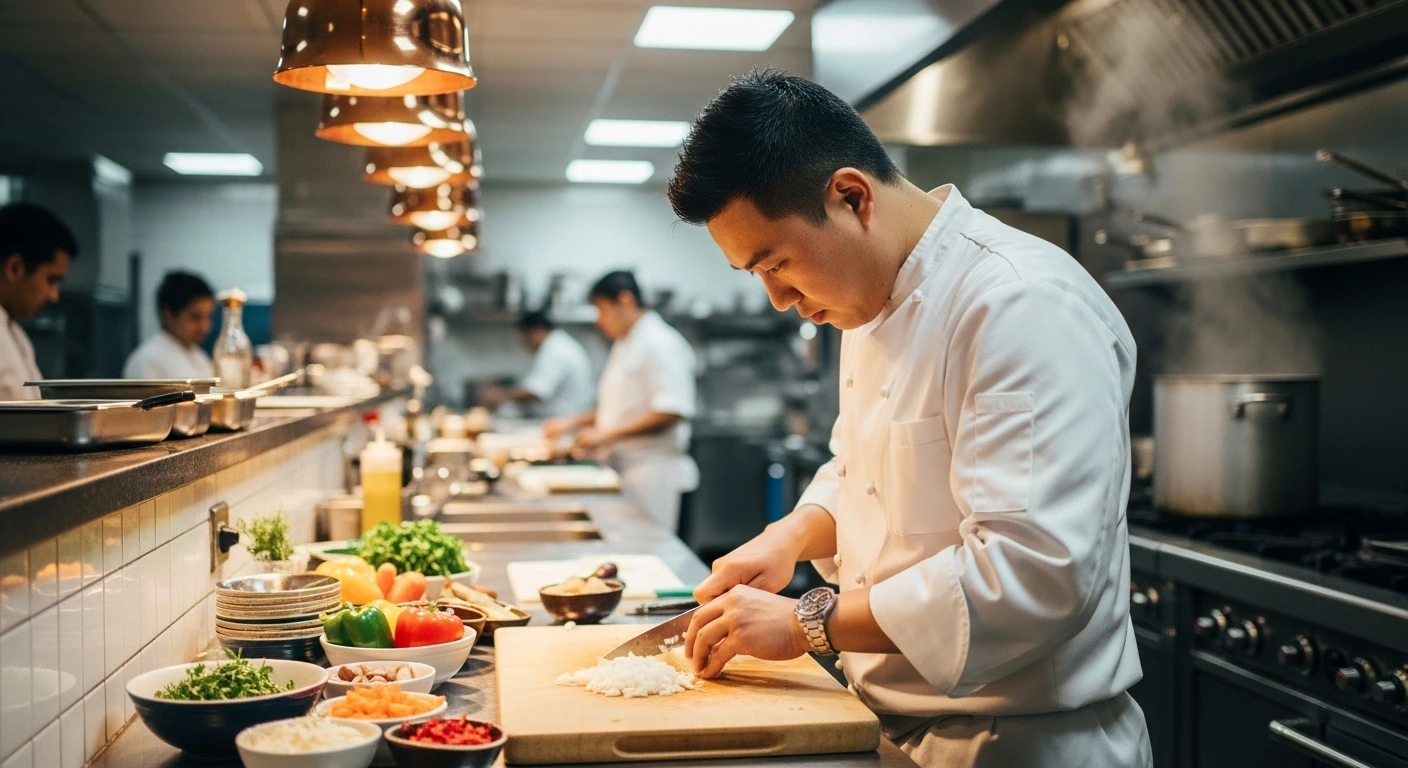
- Run a quick knife test (e.g., dice an onion, slice tomatoes); watch consistency, finger safety, and board setup.
- After the demo, look for professional habits: labeling, dating, wrapping, and proper storage placement.
- Probe sanitation literacy with brief follow-ups on storage hierarchy, glove changes, and allergen handling.
Candidate Preparation Tips
For candidates: show reliability, sanitation awareness, and eagerness to learn.
- Study the menu, arrive early, and bring a positive, coachable attitude; be honest about gaps.
- Refresh basic knife cuts and safe workstation setup; ask clarifying questions to avoid waste.
- Be ready to discuss availability, pace under pressure, and how you keep stations clean and organized.