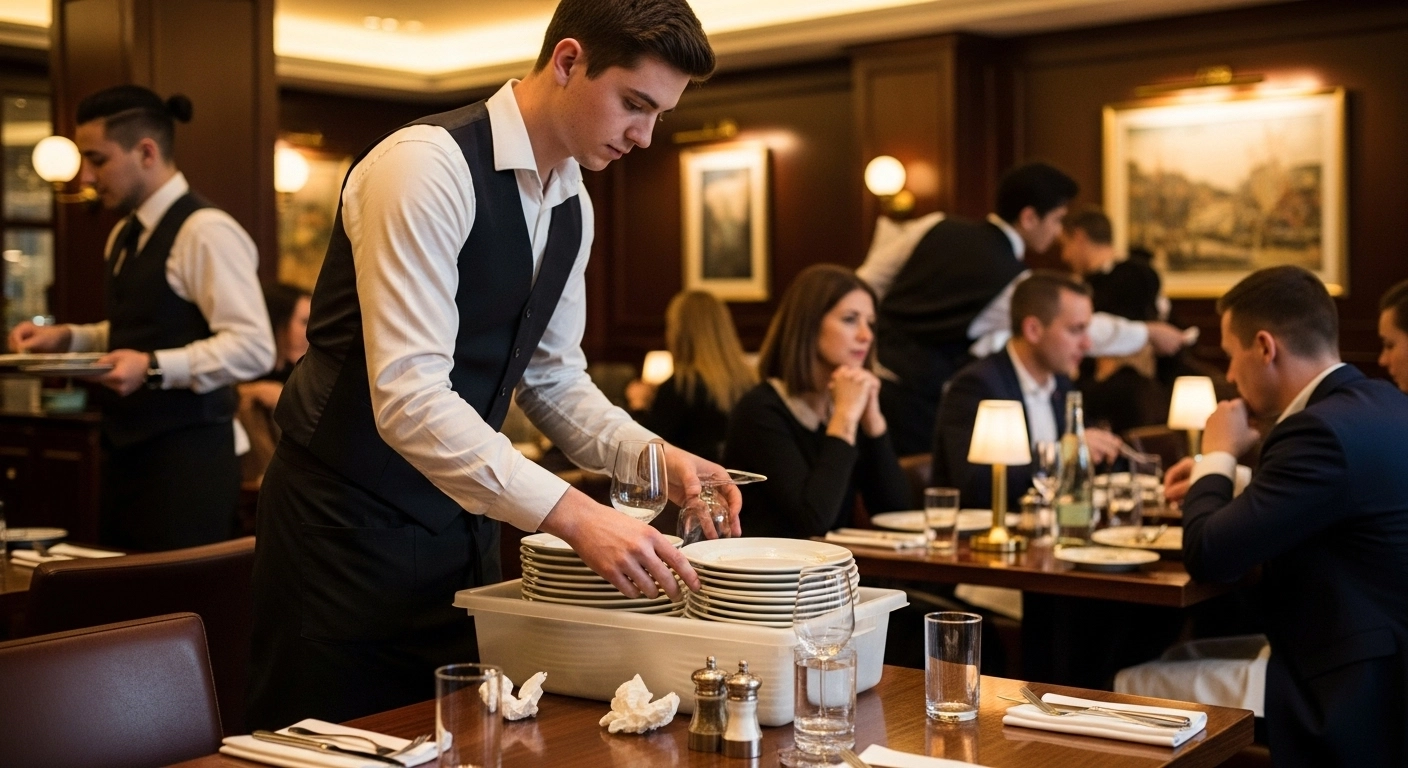
Bussers keep dining rooms running smoothly by resetting tables fast, maintaining spotless stations, and supporting servers so guests get seated and served quickly. Interviews can be tricky because they test work ethic, attention to detail, stamina, safety awareness, teamwork, and a service mindset all at once. This article provides practical Busser interview questions, sample answers, and concise tips for both candidates and hiring managers.
Most Common Interview Questions
- Why are you interested in this busser role and our restaurant?
- How flexible is your availability for nights, weekends, and holidays?
- Tell us about your experience clearing and resetting tables during a rush.
- How do you make sure tables meet standards and turn quickly at peak times?
- How do you keep service stations clean and use cleaning chemicals safely?
- During a rush, how do you coordinate with servers, hosts, and the kitchen?
- You notice a spill while several tables need clearing—what do you do first?
- Describe a time you handled a difficult guest while bussing.
- In your view, what is the most important quality for a busser and why?
- What do you understand about the busser role and standards at our restaurant?
General Questions
Why are you interested in this busser role and our restaurant?
Sample Answer: I enjoy fast-paced, team-based environments and like seeing how bussing directly improves guest wait times and table turnover. Your restaurant’s focus on consistent service and cleanliness matches how I work. I’m excited to contribute and learn more about your standards.
What a Strong Answer Includes
- Clear motivation tied to the restaurant’s concept, pace, and guest experience
- Evidence of understanding how bussers impact table turns and satisfaction
- Specific reasons this venue is a good fit (service style, values, growth)
How flexible is your availability for nights, weekends, and holidays?
Sample Answer: I can work most weeknights, every weekend, and major holidays, with advance notice for schedule changes. If school starts, I’ll provide an updated schedule early so we can plan coverage. I’m also open to picking up extra shifts during peak seasons.
What a Strong Answer Includes
- Specific days/times plus any constraints and how they’ll be communicated
- Willingness to cover peak periods (weekends/holidays) and adapt as needed
- Reliability and proactive coordination to help managers staff predictably
Background and Experience Questions
Tell us about your experience clearing and resetting tables during a rush.
Sample Answer: In my last role, I averaged under two minutes to clear, sanitize, and reset a four-top during dinner peaks. I staged silverware and side towels ahead of time and coordinated with the host so the next party could be seated immediately. When needed, I asked a teammate to trail me with glassware bins to speed resets.
What a Strong Answer Includes
- Concrete details (station setup, timing, steps to sanitize and reset)
- Examples of teamwork and coordination with hosts/servers
- Process improvements or metrics that show speed without sacrificing standards
Role-Specific and Safety/Hygiene Questions
How do you make sure tables meet standards and turn quickly at peak times?
Sample Answer: I follow a consistent checklist: scrape, clear, spray, wipe with the correct sanitized towel, dry if needed, then reset to spec. I keep caddies pre-stocked and communicate with the host when a section is almost ready. If backed up, I flag a teammate to run glasses or silver so I can focus on sanitizing and layout.
What a Strong Answer Includes
- A step-by-step reset process that prioritizes sanitation and consistency
- Preparation habits (pre-stocking, tool placement) that reduce delays
- Communication with hosts/servers to align table readiness with seating
How do you keep service stations clean and use cleaning chemicals safely?
Sample Answer: I label spray bottles, mix to the correct dilution, wear gloves when required, and keep SDS access handy. I use color-coded towels to avoid cross-contamination and wipe high-touch areas on a schedule. For broken glass or bodily fluids, I isolate the area, use the proper tools and PPE, and dispose of waste per policy.
What a Strong Answer Includes
- Knowledge of chemical labeling, dilution, SDS, and PPE
- Cross-contamination controls (color-coded cloths, separate buckets)
- Clear steps for hazardous spills, broken glass, and proper disposal
Soft Skills and Teamwork Questions
During a rush, how do you coordinate with servers, hosts, and the kitchen?
Sample Answer: I keep callouts short and specific—what I’m doing, what I need, and by when. I check the seat map, prioritize tables for the host, and support servers with refills or running food as directed. Quick updates reduce duplicate work and keep the line of guests moving.
What a Strong Answer Includes
- Concise communication methods and common signals or callouts
- Awareness of seat maps, pacing, and critical handoffs
- Flexibility to shift between bussing, running, and support tasks
Situational and Behavioral Questions
You notice a spill while several tables need clearing—what do you do first?
Sample Answer: I address the safety risk first: place a wet floor sign, block the area, and clean the spill or call for immediate help if I’m carrying a tray. Once safe, I return to clearing and reset tables by urgency (next-to-seat first). I communicate with the host so they don’t seat near the former spill until dry.
What a Strong Answer Includes
- Safety-first triage with clear steps to prevent slips and injuries
- Prioritization logic for table turns after the hazard is handled
- Brief communication to keep seating and service aligned
Customer-Facing Questions
Describe a time you handled a difficult guest while bussing.
Sample Answer: A guest pointed out crumbs under the table; I apologized, fixed it immediately, and checked nearby areas to prevent repeats. I let the server know so they could follow up with the guest and ensure satisfaction. The guest thanked us for the quick response and stayed for dessert.
What a Strong Answer Includes
- Calm, respectful tone and prompt action to resolve the issue
- Basic service recovery steps and visible attention to detail
- Team communication so the server/manager can close the loop
Values and Quality Questions
In your view, what is the most important quality for a busser and why?
Sample Answer: I’d choose attention to detail because guests notice cleanliness immediately, and it drives table turns and reviews. When every reset is consistent, the whole team moves faster and servers earn more. Detail orientation also supports safety and sanitation standards.
What a Strong Answer Includes
- A clear choice (e.g., detail, urgency, teamwork) tied to outcomes
- How that quality impacts speed, safety, and guest perception
- Brief example or habit that shows the quality in action
Employer-Focused Questions
What do you understand about the busser role and standards at our restaurant?
Sample Answer: From your website and visit, I understand bussers reset to strict place-setting specs, maintain spotless service stations, assist with water, refills, and running food, and update the host on table readiness. Speed matters, but sanitation and safety come first. I’m ready to learn your exact SOPs and follow them consistently.
What a Strong Answer Includes
- Evidence of research about the venue (service style, table setting, pace)
- Understanding of core duties and standards specific to the restaurant
- Willingness to learn SOPs and uphold safety/sanitation policies
Tips to Ace Your Busser Interview
- Candidates: Review basic sanitation (dilutions, SDS, PPE, cross-contamination), safe tray handling, and broken-glass procedures.
- Candidates: Know the menu basics and service style; be ready to discuss availability for weekends/holidays and long shifts.
- Candidates: Arrive early, wear clean non-slip shoes, bring IDs for onboarding, and prepare two thoughtful questions about standards or training.
- Both: Practice concise stories that show detail, speed, teamwork, and calm under pressure.
Hiring Tips for Employers
- Prioritize attitude, availability coverage, and reliability; train technical details after onboarding.
- Use short role-plays (spill response, two-minute reset) to assess safety and speed.
- Verify sanitation knowledge and observe communication style with a quick floor walk-through.
FAQ
How should candidates prepare for a busser interview?
Study the restaurant’s concept, review sanitation basics, and practice short examples of teamwork and prioritization under pressure. Bring an updated availability list and any certifications.
What should candidates wear?
Neat, professional attire with closed-toe non-slip shoes if possible; avoid overdressing but look clean and job-ready.
Do bussers need certifications?
Not always, but food handler or sanitation cards are valuable and sometimes required locally. Basic first aid awareness is a plus.
How long do interviews usually take?
Typically 15–30 minutes, sometimes followed by a brief walk-through or trial shift to observe pace and safety habits.