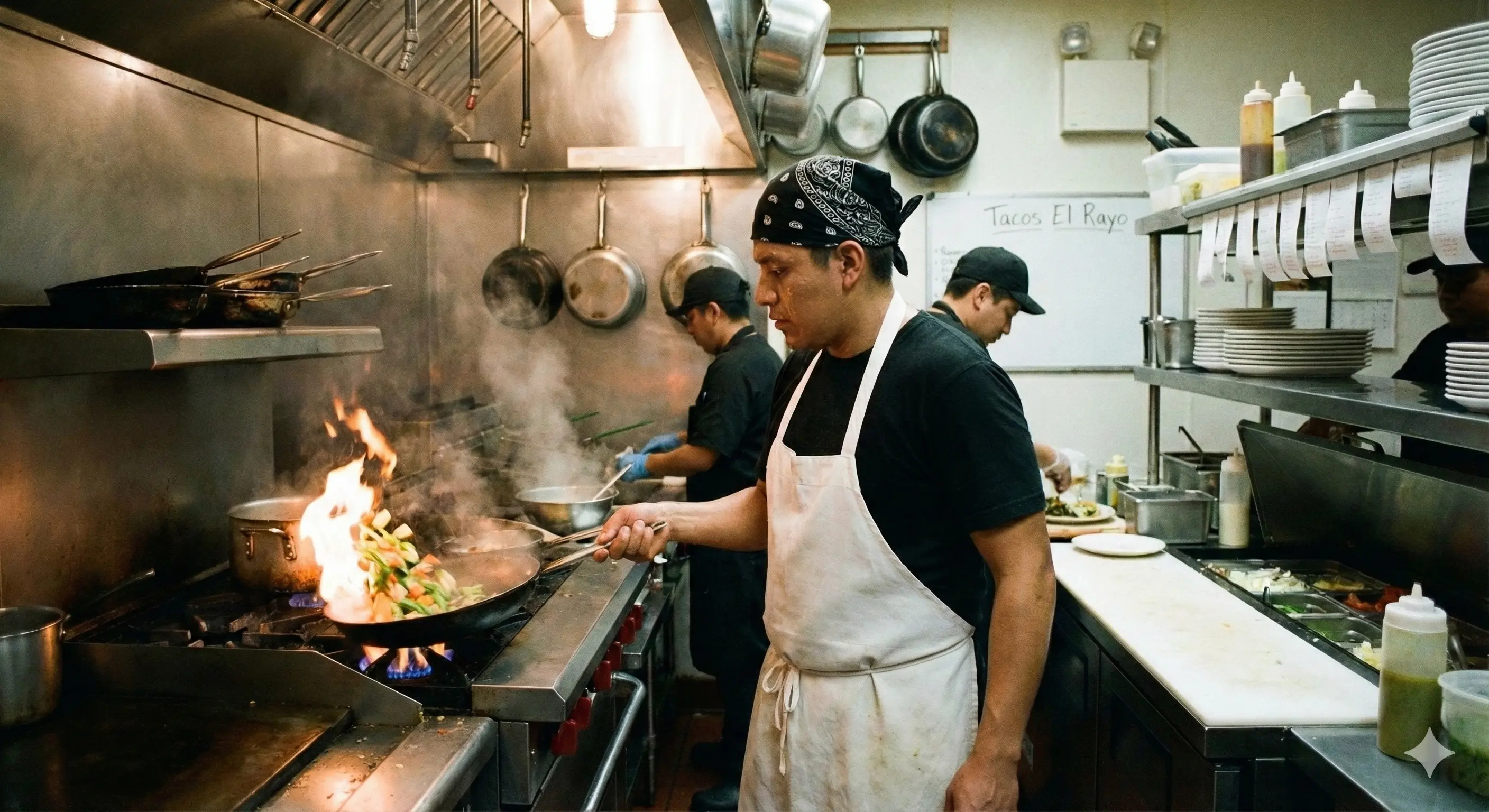
Line cooks (also called chef de partie or station cooks) own a station, execute the chef’s direction, and keep dishes timely, consistent, and safe. Interviews can be challenging for both candidates and hiring managers who need to evaluate speed, technique, and teamwork under pressure. This guide offers practical, ready-to-use line cook interview questions, sample answers, and tips for a confident, efficient hiring process.
Top Interview Questions
- Tell us about yourself and your path into the kitchen.
- How do you set up your station at the start of a shift?
- Walk me through broiling vs. braising and when you’d use each.
- Describe how you keep food quality consistent during a rush.
- What steps do you take to season and sear a steak properly?
- How do you handle a dish that gets sent back?
- You’re running low on a key ingredient mid-service—what’s your plan?
- How do you communicate 86’d items to FOH during service?
- What’s your approach to food safety and preventing cross-contamination?
- Why do you want to work at our restaurant, and what do you know about our menu?
General Fit and Motivation Questions
Tell us about yourself and your path into the kitchen.
Sample Answer: I started in prep and moved to grill and sauté in high-volume, scratch kitchens. I enjoy the pace, the craft of consistent plating, and being part of a team that executes cleanly during rushes. I’m now looking to apply my skills in a kitchen where standards and learning are high.
What a Strong Answer Includes
- A concise timeline highlighting stations, cuisines, and growth
- Specific strengths relevant to the role (speed, organization, coachability)
- Clear motivation aligned with teamwork and high standards
Experience & Technical Knowledge Questions
Walk me through broiling vs. braising and when you’d use each.
Sample Answer: Broiling uses intense top-down dry heat for fast browning on thinner cuts or finishing a gratin. Braising is a low-and-slow, moist-heat method for tougher cuts, building flavor in the liquid and producing tenderness. I’d broil a marinated salmon for crisp top texture and braise short ribs to break down connective tissue and deepen flavor.
What a Strong Answer Includes
- Correct definitions of heat type, speed, and best-use cases
- Examples that show understanding of texture and doneness
- Judgment on when to choose each method for menu items
What steps do you take to season and sear a steak properly?
Sample Answer: I bring the pan to high heat, pat the steak dry, season generously, and add a high-smoke-point fat before searing without moving to develop a crust. I baste with aromatics, check internal temp, rest the steak, and finish with the appropriate seasoning or butter. Timing, heat control, and resting are key to consistency.
What a Strong Answer Includes
- Sequenced steps (drying, seasoning, heat, sear, baste, temp, rest)
- Notes on heat management and fat/salt choices
- Consistency details: thermometer use, carryover cooking, plating
Station Setup, Speed & Consistency Questions
How do you set up your station at the start of a shift?
Sample Answer: I confirm par levels, label and date backups, sharpen my knife, and arrange mise by frequency of use for efficient movement. I calibrate burners, verify pans and tools, and prep garnishes so every plate can be built the same way. Before service, I check specials, allergens, and 86’d items with the team.
What a Strong Answer Includes
- Clear mise en place workflow, labeling, and par checks
- Tool readiness and station layout for speed and safety
- Pre-shift communication on specials, allergens, and counts
Describe how you keep food quality consistent during a rush.
Sample Answer: I batch steps that don’t compromise quality, follow plate standards, and verify temps and seasoning before the pass. I call timing, ask for support if needed, and avoid shortcuts that would cause re-fires. Clean-as-you-go keeps the station organized and prevents mistakes.
What a Strong Answer Includes
- Commitment to plate specs, temps, and seasoning checks
- Calm communication and intelligent task grouping
- Willingness to ask for help to protect quality and timing
Food Safety & Sanitation Questions
What’s your approach to food safety and preventing cross-contamination?
Sample Answer: I follow FIFO, strict labeling, and temp logs, and I separate raw and ready-to-eat with color-coded boards and sanitized tools. I maintain handwashing discipline and change gloves appropriately. If there’s any doubt on food safety, I discard and reset the process.
What a Strong Answer Includes
- Specifics: FIFO, labeling, temps, sanitizer practices
- Physical separation and tool/board color-coding
- Zero-tolerance mindset and corrective actions
Teamwork, Communication & Conflict Questions
How do you communicate 86’d items to FOH during service?
Sample Answer: I alert the chef/manager immediately, confirm the exact count remaining, and update the line and expo. We notify FOH via the agreed channel—verbal call, POS note, or radio—and confirm acknowledgment. I also suggest substitutions to help servers guide guests.
What a Strong Answer Includes
- Immediate escalation and precise counts
- Use of established communication channels with confirmation
- Proactive alternatives to reduce guest disappointment
Customer Service & Quality Focus Questions
How do you handle a dish that gets sent back?
Sample Answer: I confirm the issue with expo, check the ticket and specs, and remake promptly to the guest’s request. If it’s our error, I adjust the process to prevent repeats and communicate any timing impact to FOH. I reset mentally to keep the rest of the board on track.
What a Strong Answer Includes
- Ownership, speed, and accuracy on the re-fire
- Root-cause thinking to prevent recurrence
- Clear timing updates to maintain service flow
Scenario-Based Problem-Solving Questions
You’re running low on a key ingredient mid-service—what’s your plan?
Sample Answer: I notify the chef and expo, confirm remaining portions, and update FOH to manage guest expectations. If allowed, I offer an approved substitution or modify the dish without compromising quality. I also note the par issue to correct ordering or prep for future shifts.
What a Strong Answer Includes
- Fast chef/FOH communication with accurate counts
- Safe, brand-aligned substitutions or 86 decisions
- Learning loop to fix prep or par planning
Restaurant Fit & Career Goals Questions
Why do you want to work at our restaurant, and what do you know about our menu?
Sample Answer: I’ve studied your menu and see strong technique with seasonal sourcing—exactly the style I want to execute. I can contribute immediately on grill or sauté and grow with your standards. Your team’s reputation for training and consistency is a great fit for my goals.
What a Strong Answer Includes
- Proof of research: dishes, techniques, sourcing, service style
- Specific ways the candidate can add value on day one
- Alignment with culture, learning, and long-term growth
Practical Tests/Stages: What to Expect and How to Prepare
For candidates:
- Expect short tasks: precise dice, a basic sauce, a quick sear, cleaning as you go, and calling “Behind/Hot/Sharp.”
- Bring a sharp chef’s knife, marker, thermometer, and non-slip shoes; confirm what tools are provided.
- Set up a tidy mini-station fast; label, date, and keep towels and sanitizer organized.
For employers:
- Design a 30–60 minute stage that mirrors the station’s pace; observe setup, knife safety, sanitation, and communication.
- Include a timing element and a simple spec plate to assess consistency under stress.
- Debrief with specific feedback and next steps the same day when possible.
Tips for Hiring Managers
- Open with your restaurant’s story, pace, station expectations, and availability needs.
- Ask targeted technical and scenario prompts tied to your menu (allergens, par levels, plating standards).
- Evaluate communication: how they call tickets, handle 86s, and coordinate with expo/FOH.
- Use a short, relevant practical test; score consistency, cleanliness, and calm under pressure.
- Outline growth paths, training, and scheduling norms to set clear expectations.
Tips for Candidates
- Study the menu and practice core techniques (searing, blanch/shock, emulsions, temps).
- Prepare examples about rush management, quality control, and safety—keep them concise.
- Show up early with clean attire and tools; demonstrate clean-as-you-go and organized mise.
- Communicate clearly on the line: time calls, acknowledgment, and 86 updates.
- After the interview/stage, send a brief thank-you noting what you learned and how you add value.
FAQs
How should I prepare for a line cook interview?
Review the menu, confirm techniques relevant to the kitchen’s style, and practice concise stories about rushes, safety, and teamwork. Bring essential tools and arrive early to observe flow and standards. Be ready to discuss availability and station flexibility.
What do hiring managers look for most in line cooks?
Consistent technique, organized mise, sanitation discipline, and calm, clear communication. They also look for reliability, learning mindset, and alignment with the restaurant’s pace and culture. Small details—labeling, station cleanliness, and time calls—signal professionalism.
What should I expect in a stage or practical test?
Short, focused tasks that reveal knife skills, heat control, plating consistency, and station etiquette. Evaluators watch your setup, cleanliness, and communication under time pressure. Expect feedback and, often, a discussion of next steps the same day.
What are the hardest parts of the role?
Managing stress during long, fast services, staying consistent on every plate, and communicating effectively with BOH and FOH. Physical demands and strict safety standards require stamina and discipline. Preparation and teamwork habits make these challenges manageable.