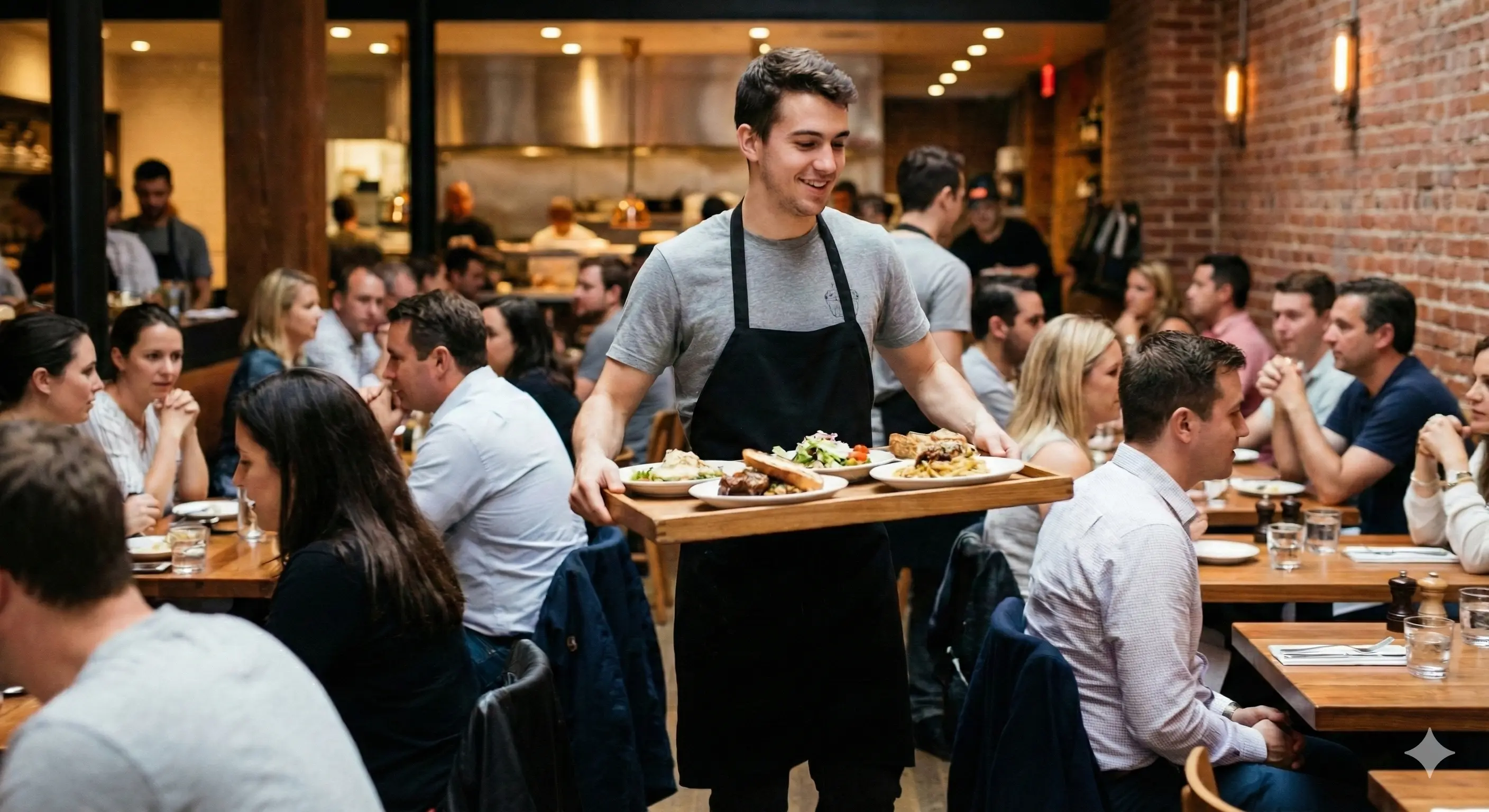
Food runners are the vital link between the kitchen and the dining room, ensuring plates arrive fast, hot, and accurate. Interviews can be tricky because the role blends speed, precision, guest recovery, and teamwork under pressure. This guide offers practical Food runner interview questions with sample answers and clear cues to help both candidates and hiring teams.
Top Interview Questions
- How do you ensure food goes to the correct guest every time?
- What steps do you take at the pass before leaving with plates?
- How do you prioritize multiple hot dishes during a rush?
- Describe your technique for carrying multiple dishes or a heavy tray safely.
- A guest says their order is wrong or missing—what do you do?
- How do you communicate modified or allergy orders to the kitchen?
- How do you memorize table numbers and seating positions on a new floor plan?
- How do you balance speed and accuracy?
- What do you do to prevent cross-contamination and handle allergies correctly?
- How do you manage stress and work with the team during peak times?
How to Use This Guide
For hiring managers: select 2–3 questions from each category to cover execution, safety, guest recovery, and teamwork. For candidates: skim the categories to match your experience, then prepare short, specific examples and be ready to explain your techniques. Use the sample answers to shape your own concise responses.
Core Execution & Accuracy Questions
How do you ensure food goes to the correct guest every time?
Sample Answer: I learn the floor plan and seat numbers during pre-shift, then confirm ticket details at the pass. At the table, I place items by seat and confirm discreetly if needed, especially for modifiers and allergies.
What a Strong Answer Includes
- Clear use of seat numbers, table maps, and ticket verification
- Discreet guest confirmation techniques without disrupting service
- Consistency methods that reduce wrong drops across different sections
What steps do you take at the pass before leaving with plates?
Sample Answer: I read back the ticket, double-check modifiers and allergens with expo, and scan presentation for garnishes and temperatures. If anything is off, I address it on the spot before running.
What a Strong Answer Includes
- Ticket read-back for accuracy and allergy confirmation
- Visual quality check: plating, temperature, garnishes, and completeness
- Willingness to pause and correct issues before leaving the pass
How do you prioritize multiple hot dishes during a rush?
Sample Answer: I group plates by section and time, run the longest-held hot items first, and coordinate with other runners to clear full trays. If timing conflicts, I call for a teammate to split the run so nothing sits.
What a Strong Answer Includes
- Time-based triage and section grouping to protect food quality
- Collaboration with expo and other runners to speed delivery
- Proactive decisions that minimize hold times
Describe your technique for carrying multiple dishes or a heavy tray safely.
Sample Answer: I balance the tray with heavier items closest to my body, plan a clear path, and communicate “hot” and “behind.” For very heavy or awkward runs, I ask for a spotter to avoid accidents.
What a Strong Answer Includes
- Safe body mechanics and tray balance fundamentals
- Situational awareness: path planning and guest/staff communication
- Judgment to request help to prevent spills or injuries
How do you memorize table numbers and seating positions on a new floor plan?
Sample Answer: I do a quick walk-through, break the room into quadrants, and note server sections. I use a standard seat-numbering flow at each table and quiz myself during the first hour.
What a Strong Answer Includes
- Specific techniques: quadrant mapping, server sections, seat-numbering
- Pre-shift practice to shorten the learning curve
- Adaptability to different floor plans or seasonal layouts
How do you balance speed and accuracy?
Sample Answer: Accuracy comes first because a wrong drop creates delays and remakes. I keep speed high by organizing runs by section and verifying once at the pass instead of fixing mistakes later.
What a Strong Answer Includes
- Prioritization rationale that protects guest experience
- Process habits that enable both speed and correctness
- Examples of how accuracy reduces rework and wait times
Kitchen & FOH Communication Questions
How do you communicate modified or allergy orders to the kitchen?
Sample Answer: I ensure the ticket clearly flags allergies and modifiers, confirm with expo or the chef, and use any required tags or plating markers. Before leaving, I verify the modification again so the guest receives the correct item safely.
What a Strong Answer Includes
- Clear, concise communication with expo/chef using the proper system
- Visible labeling or plating markers for allergies and modifications
- Final verification before the runner leaves the pass
How do you maintain clear communication between the kitchen, servers, and hosts during peak periods?
Sample Answer: I give quick status updates, confirm who owns each table, and check back with servers after runs for add-ons or delays. If the board backs up, I let the host know expected seating times to avoid overloading the line.
What a Strong Answer Includes
- Short, frequent updates that keep the whole team aligned
- Awareness of section ownership and coursing
- Coordination with hosts to balance seating with kitchen capacity
What systems are you comfortable with—seating charts, coursing, expo, or POS ticketing?
Sample Answer: I’ve used seat-number systems, course fires at expo, and basic POS views to track ticket times. I adapt quickly by asking for the house standard and practicing during pre-shift.
What a Strong Answer Includes
- Familiarity with common FOH/BOH systems and terminology
- Ability to learn a new restaurant’s workflow quickly
- Focus on consistency and minimizing miscommunication
Customer Service & Problem-Solving Questions
A guest says their order is wrong or missing—what do you do?
Sample Answer: I apologize, verify the ticket, and either retrieve the missing item immediately or alert expo for a quick remake. I inform the server or manager so the table feels looked after while we resolve it.
What a Strong Answer Includes
- Calm apology and quick verification against the ticket
- Immediate action to replace or expedite the item
- Looping in the server/manager to close the recovery
What would you do if a customer tried to place an order with you directly?
Sample Answer: I’d thank them, note the request, and let them know their server will take care of it right away. I’d immediately inform the server and, if appropriate, relay simple add-ons to keep things moving.
What a Strong Answer Includes
- Polite redirection that maintains smooth service
- Fast communication to the responsible server
- Judgment on quick add-ons without causing confusion
How do you keep guests satisfied while focusing on running food?
Sample Answer: I do quick check-ins when I drop, offering condiments or utensils and giving a brief update if there’s a delay. I pass any needs to the server so nothing gets missed.
What a Strong Answer Includes
- Brief, friendly touchpoints at the table
- Proactive offers for common needs (condiments, utensils)
- Hand-offs to the server to ensure follow-through
Food Safety & Cleanliness Questions
What do you do to prevent cross-contamination and handle allergies correctly?
Sample Answer: I confirm allergies with expo, use the designated allergy procedures and labels, and avoid contact with other plates or surfaces. If anything is uncertain, I stop and verify before running the dish.
What a Strong Answer Includes
- Specific allergy protocol steps and visual identifiers
- Sanitation habits and avoidance of shared contact points
- Confidence to pause service to prevent unsafe drops
How do you keep the pass and dining area clean and organized during service?
Sample Answer: I practice a “wipe-and-run” habit, bus on the way back, and follow sidework checklists. A tidy pass makes accuracy faster and reduces accidents.
What a Strong Answer Includes
- Concrete routines for ongoing cleanliness and organization
- Integration of bussing with running to save time
- Understanding that clean stations improve speed and safety
Pace, Teamwork & Stress Questions
How do you manage stress and work with the team during peak times?
Sample Answer: I keep communication short and frequent, organize tickets by urgency, and ask for help early. I stay calm by focusing on one run at a time while keeping an eye on the board.
What a Strong Answer Includes
- Simple prioritization and time management habits
- Proactive teamwork and willingness to delegate or assist
- Composure and focus in fast-changing situations
Tell us about a time you and the team fixed a service bottleneck.
Sample Answer: We were backed up on hot apps, so we reassigned one runner to expo handoffs and paired two runners by section. Ticket times dropped, and we cleared the board within two turns.
What a Strong Answer Includes
- Example of reassigning roles or tasks to relieve pressure
- Clear communication loop with measurable improvement
- Focus on guest impact (faster delivery, hotter food)
Physical Demands & Safety Questions
Are you able to carry food safely and stay on your feet for long shifts? How do you manage the physical demands?
Sample Answer: I wear supportive, non-slip shoes, hydrate, and take brief resets to maintain pace without fatigue. For heavy or awkward runs, I position items close to my core and get help when needed.
What a Strong Answer Includes
- Safe lifting and carrying habits with proper footwear
- Realistic stamina strategies for long shifts
- Willingness to ask for assistance to prevent injuries
Experience, Motivation & Growth Questions
Why do you want to work as a food runner at our restaurant?
Sample Answer: I like your concept and menu, and I enjoy being part of a fast, guest-focused team. This role lets me build accuracy and pace while learning more about service and the line.
What a Strong Answer Includes
- Genuine interest in the restaurant’s concept and standards
- Service mindset focused on guest experience
- Desire to learn and grow within hospitality
What are your expectations for the service team, and how do you support servers?
Sample Answer: I expect clear check-ins, quick handoffs, and mutual help during rushes. I keep servers updated after every run so they can time checks and course fires.
What a Strong Answer Includes
- Emphasis on mutual support and fast communication
- Examples of proactive updates to servers
- Understanding of how running affects pacing and checks
Do you hold any relevant certifications (e.g., food handler), and how have they helped you?
Sample Answer: I hold a current food handler card, which keeps my sanitation and allergy knowledge sharp. It helps me spot risks early and handle food more confidently.
What a Strong Answer Includes
- Up-to-date, relevant certifications
- Specific takeaways applied on the job
- Commitment to safety and professional standards
Tips for Employers
- Mix practical runs with questions: ask candidates to walk the floor plan, explain seat numbers, or carry a tray safely.
- Probe for verification habits: ticket read-backs, allergy markers, expo check-ins, and table mapping.
- Look for service recovery mindset: calm apology, quick fix, and clear communication back to the server/manager.
- Evaluate professionalism: hygiene, non-slip footwear, concise communication, and teamwork language.
- Share expectations: pacing standards, runner-to-expo ratios, and how you handle bottlenecks and comps.
Tips for Candidates
- Study the menu and modifiers, and learn a sample seat-number system so you can explain your approach.
- Practice carrying and tray balance; be ready to show safe paths, communication (“hot/behind”), and when you’d ask for help.
- Prepare brief examples of guest recovery, rush prioritization, and teamwork during crunch time.
- Know allergy protocols and cross-contamination basics; mention any certifications.
- Arrive early to scan the floor plan; mentally map sections and entrances/exits.
FAQs About Food Runner Interviews
How long does a typical food runner interview take?
Most are 20–30 minutes, sometimes followed by a brief floor walkthrough or a short working trial.
What should I wear to a food runner interview?
Business-casual with closed-toe, non-slip shoes if a floor demo is possible. Keep appearance neat and professional.
Do I need a food handler card?
Many restaurants require it or prefer it. If you don’t have one yet, be ready to obtain it quickly.
What skills matter most?
Accuracy, speed with composure, clear communication, guest recovery, and food safety awareness.
How can I prepare quickly?
Review the menu, walk the floor if offered, practice carrying, and prepare two short stories: one about fixing a mistake and one about handling a rush.