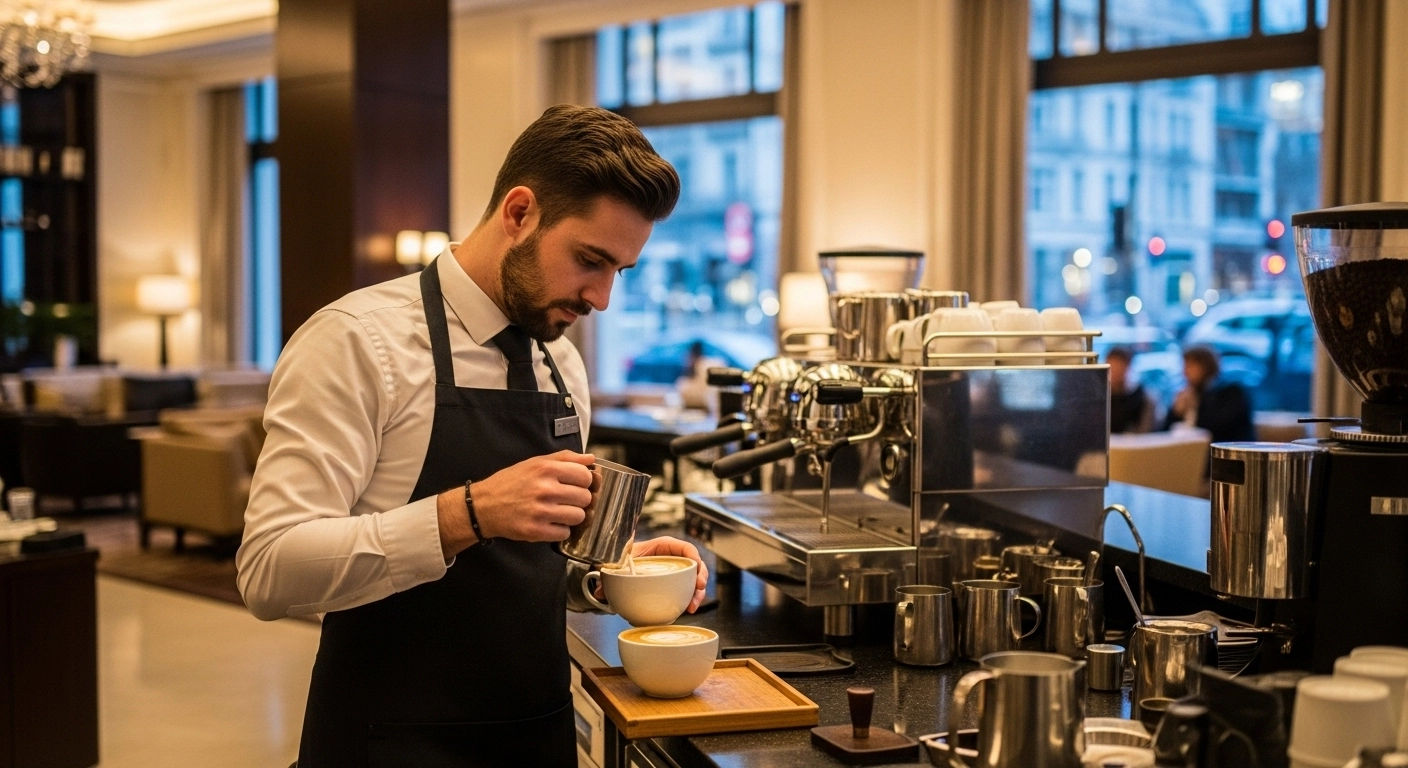
Baristas are both craft-focused and customer-facing, turning beans, milk, and water into consistent drinks while keeping lines moving and guests happy. The challenge in hiring or interviewing is separating genuine coffee skill and service mindset from buzzwords, and ensuring reliability in a fast-paced setting. This guide offers practical Barista interview questions with concise sample answers so candidates can prepare and employers can evaluate confidently.
Sample Answer: I enjoy the mix of craft and hospitality—dialing in coffee and making people’s mornings better. I like roles where consistency, speed, and small details add up to a great guest experience. Coffee gives me a chance to keep learning every day.
What a Strong Answer Includes
Sample Answer: Your menu highlights seasonality and clear recipes, and your reviews mention friendly, fast service—both matter to me. I’ve visited and noticed your team communicates well on bar. I’d like to contribute to that consistency while growing my skills with your brew methods.
What a Strong Answer Includes
Sample Answer: I’m available for openers three weekdays plus both weekend days, and I can stay late if coverage is needed. If schedules change, I communicate early and help swap shifts responsibly. Reliability is a priority for me in service roles.
What a Strong Answer Includes
Sample Answer: I’ve worked a year in a busy café handling register, bar, and drive-thru, plus opening and closing duties. I can run POS, cash out accurately, and maintain bar flow during rushes. I’ve had basic espresso training and practice latte art daily.
What a Strong Answer Includes
Sample Answer: I’d apologize, clarify their preferences in detail, and remake the drink promptly, checking sweetness, temperature, and milk texture. If it still misses, I’d offer an alternative or refund and loop in a lead to ensure they leave satisfied. I’d also note the preference in our system, if possible.
What a Strong Answer Includes
Sample Answer: I listen for cues—“something not too sweet” or “I’m in a hurry”—and suggest a fitting size or beverage. I mention limited specials or pastry pairings that genuinely match their order. The goal is better fit, not pressure.
What a Strong Answer Includes
Sample Answer: I streamline setup, batch simple tasks, and communicate roles clearly—one on shots, one on milk, one on handoff. I call tickets, verify names, and keep the station tidy to prevent mistakes. If wait times grow, I reset expectations with friendly updates.
What a Strong Answer Includes
Sample Answer: I group by drink type and size, repeat orders back using the café’s shorthand, and write key modifiers consistently. For large orders, I stage cups left-to-right in ticket order and check off as I build. Accuracy comes from a routine I use every time.
What a Strong Answer Includes
Sample Answer: A coworker and I disagreed about ticket order during a rush. I suggested we follow the posted bar flow and reassigned roles for clarity; later we synced on a better system for lulls vs peaks. The shift recovered and our process improved.
What a Strong Answer Includes
Sample Answer: I start with the house recipe (dose, yield, time), pull a test shot, and taste for balance. If it’s sour/under, I grind finer; if it’s bitter/over, I go coarser, adjusting in small increments and purging between changes. I log the final settings and monitor as the coffee ages or ambient conditions change.
What a Strong Answer Includes
Sample Answer: I start with cold milk, purge, then stretch gently until ~30–40°C, finishing with a whirlpool to 55–65°C for glossy microfoam. I tap and polish to remove big bubbles and pour immediately for integration. Texture and temperature match the drink style.
What a Strong Answer Includes
Sample Answer: I follow shop specs—for example: espresso 1–2 oz, macchiato ~3 oz, cappuccino 5–6 oz, latte 10–12 oz, and americanos matching cup sizes. I use the recipe guide and cups to keep portions consistent. Consistency protects flavor and cost.
What a Strong Answer Includes
Sample Answer: Fresh, lighter roasts often need a finer grind and possibly a higher dose to hit target time and sweetness; older or darker roasts may need a slightly coarser grind to avoid over-extraction. I make one change at a time, taste, and document. I also watch yield and flow to keep shots consistent.
What a Strong Answer Includes
Sample Answer: I build in micro-cleaning: purge wands, wipe portafilters, and clear milk rings between drinks while keeping rags separated by task. I refresh towels and sanitizer at set intervals and keep allergens labeled. A tidy station prevents errors and speeds service.
What a Strong Answer Includes
Sample Answer: I set par levels for beans, milk, syrups, and cups, restock during lulls, and alert leads early if levels dip. I rotate stock FIFO and label open dates. This keeps quality steady and prevents mid-rush shortages.
What a Strong Answer Includes
Sample Answer: I inform the team and guests, pause espresso orders, and pivot to brewed coffee or cold drinks while troubleshooting or calling for maintenance. I offer alternatives or refunds and keep communication clear about timelines. Safety and honesty come first, then recovery.
What a Strong Answer Includes
Sample Answer: I stabilize the bar: quick clean, purge, and refill critical items (beans, milk, cups) to hit par. I note the handoff issue for the lead and, after the rush, align on closing standards to avoid repeats. Stabilize, serve, then improve the process.
What a Strong Answer Includes
Sample Answer: I stay calm, confirm the order details, and offer to remake it to their preference—no debate. I might show them the menu description if helpful, but their experience matters most. I document the preference for next time.
What a Strong Answer Includes
Sample Answer: I bring consistency under pressure and a calm, friendly presence with guests. I’d like to deepen my espresso dialing and manual brew skills, and I’m happy to take on opener/closer responsibilities. I value clear communication and contributing to training as I grow.
What a Strong Answer Includes
Initial screens can be 15–30 minutes; in-person interviews often run 30–45 minutes with a short practical if applicable.
Neat, comfortable, café-appropriate attire with closed-toe shoes. If a practical is possible, choose clothes you can work in.
Not required, but bring any food-safety cards or barista training certificates. Photos of latte art are optional—skill on the machine matters more.
A brief overview of recipes, cleaning standards, scheduling expectations, and pay/benefits. If doing a practical, ensure safe, ready equipment and clear tasks.