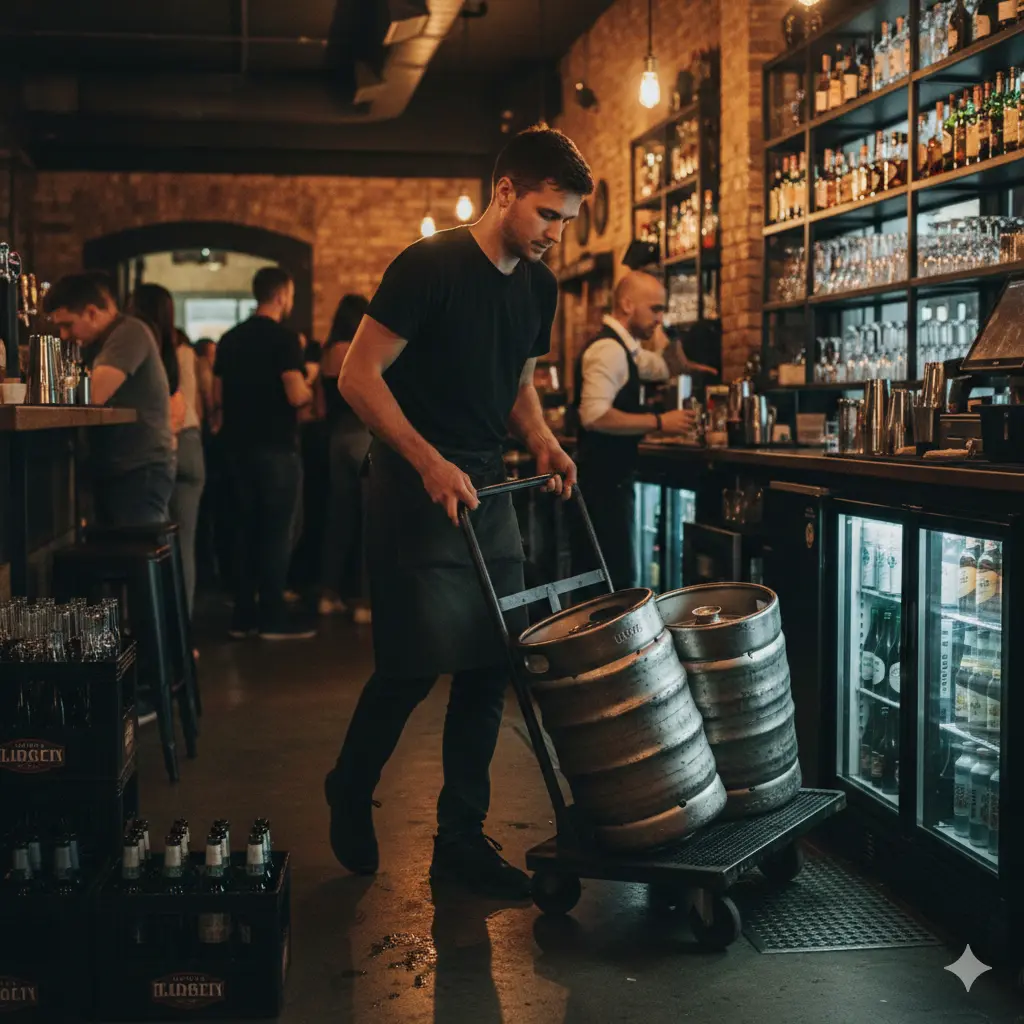
Barbacks keep service moving by stocking, cleaning, and anticipating needs so bartenders can serve quickly and safely. Interviewing for this role can be tricky because you must evaluate reliability, stamina, teamwork, and readiness for high-pressure shifts. This guide provides practical barback interview questions, sample answers, and tools both candidates and employers can use right away.
Top Barback Interview Questions
- Why do you want to barback at our venue, and how do you fit our team?
- What is your availability, and are you able to work late nights, weekends, and holidays?
- How do you stay energized and focused during long, high-volume shifts?
- Describe your experience with changing kegs safely and quickly.
- During a rush, how do you keep the bar stocked with ice, glassware, garnishes, and popular items?
- Tell me about a time you supported a team under pressure and how you prioritized tasks.
- A glass washer goes down mid-rush—how do you handle the glassware backlog while maintaining sanitation?
- How do you keep the bar clean and hazard-free and close the bar ready for the next shift?
- How would you respond if you suspect a guest has had too much to drink?
- What are your goals for the next 2–3 years—do you aim to move into bartending?
Motivation & Availability Questions
Why do you want to barback at our venue, and how do you fit our team?
Sample Answer: I’m drawn to your high-volume, craft-focused bar and the way your team communicates on the floor. I work best in fast-paced environments where I anticipate needs, restock proactively, and keep stations tidy so bartenders can focus on guests. I’m eager to learn your specs and grow with the team.
What a Strong Answer Includes
- Specific reasons tied to the venue’s concept, pace, or menu, not generic interest
- Team-first mindset: proactive restocking, cleanliness, anticipation of bartender needs
- Realistic growth goals without entitlement
What is your availability, and are you able to work late nights, weekends, and holidays?
Sample Answer: I’m fully available Thursday through Sunday and can pick up weekday shifts as needed. Late nights and holidays are fine as long as the schedule is posted in advance. I’ll communicate conflicts early and help cover when teammates need support.
What a Strong Answer Includes
- Clear days/hours of availability and flexibility for peak times
- Advance notice approach for conflicts and swaps
- Reliability and willingness to support the team’s busiest shifts
How do you manage your time to show up reliably and ready for every shift?
Sample Answer: I plan transit with a buffer, prep my uniform and tools the night before, and arrive early to check pre-shift needs. If something unexpected happens, I notify the manager immediately with an ETA. Consistency is how I earn trust.
What a Strong Answer Includes
- Concrete routines that prevent lateness and no-shows
- Proactive communication if delays occur
- Emphasis on professionalism and dependability
Experience & Background Questions
What types of bars have you supported, and how does that experience translate to our concept?
Sample Answer: I’ve worked in a high-volume sports bar and a cocktail lounge, so I’m comfortable with both speed and precision. Your menu blends classic cocktails with local drafts, which fits my experience with keg rotation, garnish prep, and glassware standards. I adapt quickly to house procedures.
What a Strong Answer Includes
- Relevant venue types (high-volume, craft cocktail, hotel, live music) and pace
- Transferable tasks: keg changes, station setup, inventory, glassware
- Openness to learning house-specific systems
Do you have any relevant training or certifications in alcohol service or safety?
Sample Answer: I completed responsible alcohol service training and a basic food safety course. While certification isn’t required for all tasks, it helps me spot overservice risks and maintain sanitation. I stay current as policies change.
What a Strong Answer Includes
- Mention of responsible service and safety knowledge (or willingness to obtain)
- Understanding of why training matters for guests and staff
- Commitment to ongoing learning
Soft Skills & Teamwork Questions
Tell me about a time you supported a team under pressure and how you prioritized tasks.
Sample Answer: During a packed game night, I focused on ice, glassware, and restocking the top movers first, updating bartenders on timing. Once essentials were stable, I rotated through garnishes and trash. We kept ticket times down and avoided 86s.
What a Strong Answer Includes
- Clear prioritization of essentials during a rush
- Brief context, specific actions, and a practical result
- Calm communication with bartenders and host/FOH teams
How do you handle feedback or criticism during a busy shift?
Sample Answer: I acknowledge the note, adjust immediately, and circle back after the rush for details if needed. Staying calm keeps service moving, and follow-up ensures I fix root causes. I see feedback as part of getting faster and safer.
What a Strong Answer Includes
- Professionalism in the moment, discussion later
- Ownership and quick adjustments without defensiveness
- Growth mindset tied to speed, safety, or quality
Hard Skills & Bar Operations Questions
Describe your process for changing a keg safely and quickly.
Sample Answer: I verify the style, vent pressure safely, close the coupler, and swap lines while checking for leaks and correct temperature/foam. I sanitize contact points and purge air before service. Communication with bartenders ensures they know the brief downtime.
What a Strong Answer Includes
- Safety steps, sanitation, and leak/foam checks
- Minimized downtime and confirmation of beer quality
- Communication before and after the change
During a rush, how do you keep the bar stocked with ice, glassware, garnishes, and popular items?
Sample Answer: I triage essentials: ice and glassware first, then top-selling spirits/mixers, followed by garnishes. I restock in small, frequent batches to avoid blocking the well and update bartenders on anything low. Quick resets keep tickets flowing.
What a Strong Answer Includes
- Priority order that keeps wells moving (ice, glassware, top SKUs)
- Small-batch restocking to reduce congestion
- Real-time communication on low items and ETAs
How do you maintain and sanitize tools, glassware, and beer lines?
Sample Answer: I follow the cleaning schedule: sanitize tools during lulls, rotate glass racks properly, and support line cleaning cycles per policy or vendor guidance. End-of-night includes wiping stations, draining ice wells, and logging any issues. Consistency prevents buildup and off-flavors.
What a Strong Answer Includes
- Knowledge of schedules and proper sanitation steps
- Attention to preventing cross-contamination and off-flavors
- Documentation and reporting of maintenance needs
Situational/Behavioral Questions
A glass washer goes down mid-rush—how do you handle the glassware backlog while maintaining sanitation?
Sample Answer: I alert the manager, shift to a manual sanitize-and-air-dry setup, and reassign racks to prioritize high-turnover glassware. I keep bartenders updated on glass types available and rotate clean glasses to the wells first. If needed, I get a runner to help until the machine is back.
What a Strong Answer Includes
- Immediate escalation and a safe backup process
- Prioritization of critical glassware and clean workflow
- Clear updates that reduce bartender downtime
Supplies are running low during peak service—what’s your plan?
Sample Answer: I stabilize essentials first, communicate substitutions if needed, and note items to reorder after service. If a mixer is nearly out, I suggest alternatives to bartenders and update the floor to set guest expectations. Post-shift, I log par changes.
What a Strong Answer Includes
- Triage of essentials with minimal disruption
- Communication of alternatives and guest expectation management
- Documentation for ordering and pars
Multiple bartenders ask for different items at once—how do you prioritize?
Sample Answer: I quickly confirm which item unblocks the most tickets (ice or glassware usually comes first), communicate the order I’ll handle requests, and knock them out in that sequence. I loop back to confirm each bartender has what they need. This keeps the well moving fairly.
What a Strong Answer Includes
- Impact-based prioritization (what clears the most tickets)
- Brief communication of the sequence
- Follow-through with quick verification
Customer Service & Responsible Service Questions
How would you respond if you suspect a guest has had too much to drink?
Sample Answer: I discreetly alert the bartender or manager, share what I observed, and support whatever the policy calls for. I help offer water or food and stay courteous while the lead handles the denial. Safety and policy come first.
What a Strong Answer Includes
- Awareness of signs of intoxication and venue policy
- Escalation to the appropriate decision-maker
- Calm, respectful guest support focused on safety
From your support role, how do you help with an unhappy guest?
Sample Answer: I keep my tone friendly, get a supervisor or bartender, and quickly provide what’s within my scope—fresh glassware, water, or a cleaned space. I share key details so the bartender can resolve it fast. Then I follow up to ensure the area is spotless.
What a Strong Answer Includes
- Service-first attitude within role boundaries
- Fast handoff with relevant details to the lead
- Cleanliness and follow-up to restore the guest’s experience
Physical Stamina & Safety Questions
How do you stay energized and focused during long, high-volume shifts?
Sample Answer: I pace myself, hydrate, and take brief, coordinated breaks when the floor allows. I rotate tasks to use different muscles and keep my head clear. Staying positive keeps energy up for the team.
What a Strong Answer Includes
- Healthy, practical strategies (hydration, pacing, quick breaks)
- Coordination with the team to avoid service gaps
- Mindset that supports endurance under pressure
Are you comfortable lifting kegs and cases and standing for long hours? What safety steps do you follow?
Sample Answer: Yes—I've handled 50–160 lb items with proper technique and ask for a team lift when needed. I wear non-slip shoes, keep pathways clear, and use carts to reduce strain. Safety is non-negotiable.
What a Strong Answer Includes
- Realistic description of abilities and limits
- Specific safety practices and use of tools/assistance
- Awareness of venue policies and ergonomics
Organization & Closing Questions
How do you keep the bar clean and hazard-free and close the bar ready for the next shift?
Sample Answer: I clean as I go—wipe stations, empty trash before it’s full, and maintain clear walkways. For close, I restock to pars, deep-clean wells/tools, drain ice, and log any maintenance issues for the opener. The goal is a ready-to-work setup.
What a Strong Answer Includes
- Clean-as-you-go habits with safety awareness
- Clear closing checklist and par-level resets
- Documentation of repairs or shortages for handoff
Growth & Goals Questions
What are your goals for the next 2–3 years—do you aim to move into bartending?
Sample Answer: I want to master barback fundamentals here, learn your cocktail builds, and move into bartending when I’m truly ready. I’m looking for a place that develops from within and provides clear steps to progress. I’m comfortable earning that opportunity.
What a Strong Answer Includes
- Specific, realistic growth path tied to skills
- Alignment with the venue’s promotion practices
- Patience and willingness to earn the next role
Barback Interview Tips (for Candidates)
- Research the venue’s concept, menu, and peak hours; be ready to discuss how you’ll support that pace.
- Be upfront about availability and transportation; reliability often decides the hire.
- Practice scenario answers about rush triage, equipment failures, and responsible service.
- Dress to the venue’s standard (clean, non-slip shoes if doing a working trial); bring a notepad.
- Ask smart questions: schedule stability, tip-out structure, and internal promotion paths.
Hiring Tips (for Employers)
- Prioritize reliability, stamina, and teamwork over perfect experience; train hard skills on the floor.
- Include scenario questions (washer failure, spill, stock-out) to gauge prioritization and communication.
- Be transparent about hours, holidays, tip-outs, and growth paths; involve a lead bartender in interviews.
Practical Assessments and Scoring Ideas
Here are some practical assessments:
- Timed restock: Rebuild ice, glassware, and top SKUs under a 10-minute clock without blocking the well.
- Washer failure drill: Set up a safe manual sanitize workflow and prioritize glassware types.
- Spill response: Demonstrate immediate hazard control and fast return to service.
- Station setup: Build a service station from a checklist, then explain your layout logic.
Here are some scoring ideas:
- Example weighting: Work Ethic/Reliability (40%), Team Support/Communication (35%), Adaptability/Problem Solving (25%).
- Use a simple scorecard: experience, problem solving, communication, safety/sanitation, culture fit, and growth trajectory.
- Keep scenarios consistent across candidates for fairness; brief debrief after each task.
Red Flags to Watch For
- Vague answers with no concrete actions or results; minimizing safety or sanitation.
- Low energy toward teamwork or unwillingness to work peak nights/holidays.
- Poor stress tolerance, defensiveness to feedback, or disorganized approach to rushes.
FAQs
What does a barback do?
Barbacks stock, clean, run, and reset stations so bartenders can serve efficiently. Typical tasks include ice and glassware management, keg changes, garnish prep, and closing checklists.
How should I prepare for a barback interview?
Study the venue’s menu and pace, review scenarios like stock-outs or equipment failure, and be ready to discuss availability and reliability. Bring examples that show prioritization and teamwork.
What should I wear to a barback interview or trial?
Choose neat, venue-appropriate attire and closed-toe, non-slip shoes for any working assessment. Aim for practical and professional.
Do I need experience to get hired as a barback?
Experience helps, but many bars hire for attitude and reliability first. Show stamina, a safety mindset, and eagerness to learn.
Is bartending school required?
No. Basic product knowledge and a willingness to learn house specs matter more. Responsible service training is a plus.
How are barbacks typically paid?
Bars vary: hourly pay plus a tip-out or tip pool is common. Ask about structure, averages, and how busy nights affect take-home pay.
What physical demands should I expect?
Long hours on your feet, lifting kegs and cases, and fast movement in tight spaces. Good shoes, pacing, and safe lifting are essential.
What is a working interview?
A short, supervised trial where you restock, set stations, or handle simple tasks. It tests speed, safety, and teamwork more than technical drink knowledge.