

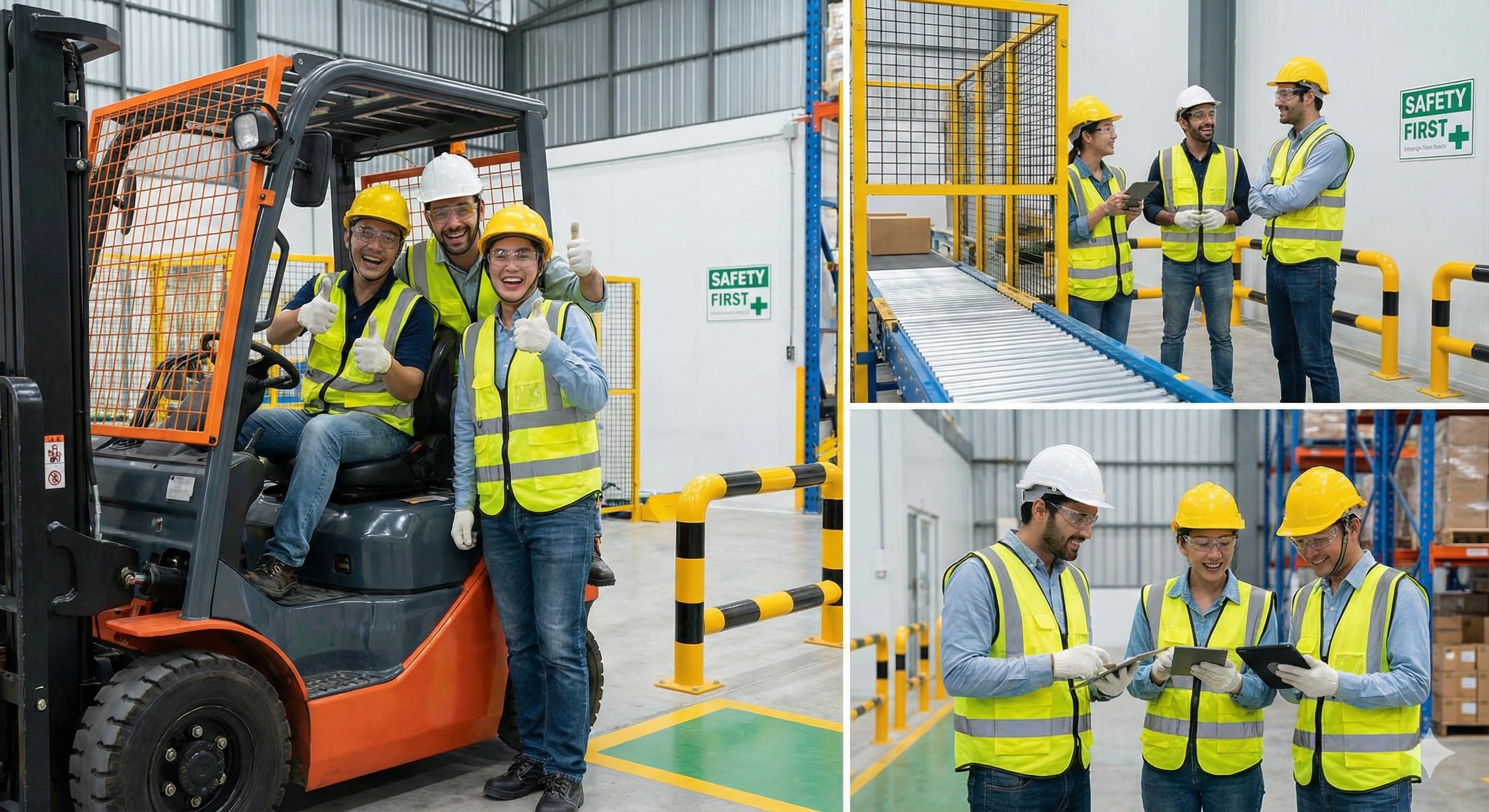
Warehouses rank among the most hazardous workplaces in the U.S., with injury rates consistently higher than in construction and manufacturing. According to OSHA and recent GAO research, the most common causes include:
The good news? Most warehouse injuries are entirely preventable.
With clear training, proper equipment handling, and a safety-first culture, you can dramatically reduce injuries and improve productivity.
A strong safety culture starts at the leadership level. All warehouse employees should receive documented hands-on training covering:
Encourage open communication so workers feel safe reporting hazards—including spills, faulty tools, damaged racking, or near-misses—without fear of punishment.
⚠️ Safety Reminder: Never allow untrained workers to operate forklifts or powered industrial trucks.
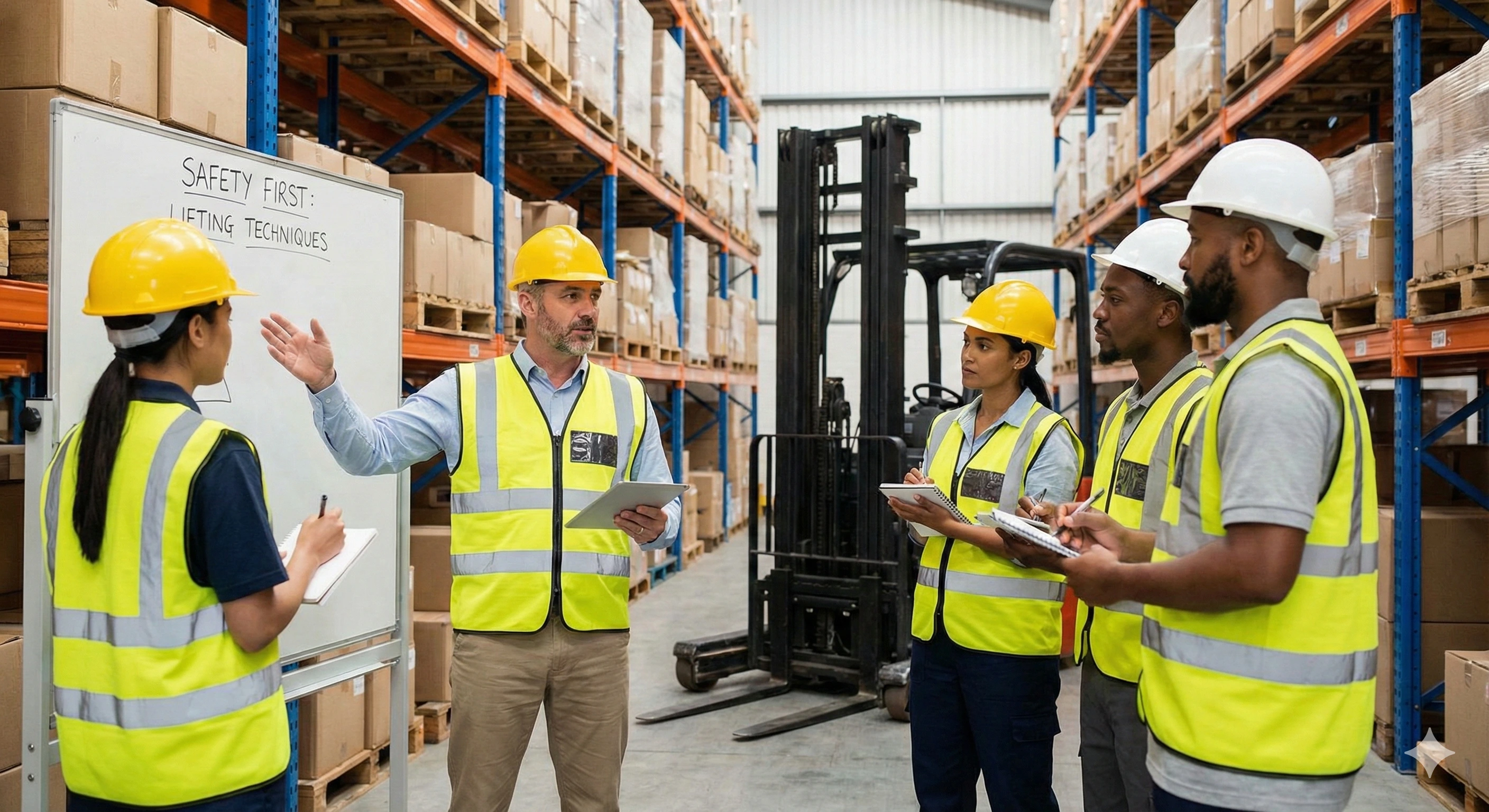
Repetitive lifting is a top cause of injury. Reduce strain by:
Teach employees to lift with their legs—not their back—and to team-lift oversized loads.
Equipment-related injuries are severe but preventable. According to OSHA’s Warehousing Hazards & Solutions guidance, many equipment-related injuries stem from poor training, outdated procedures, and a lack of preventive maintenance.
⚠️ Never allow riders on forklift forks—this is a major OSHA violation.
Instawork connects you with vetted pickers, packers, forklift operators, and general labor pros.
Find reliable warehouse workers today.
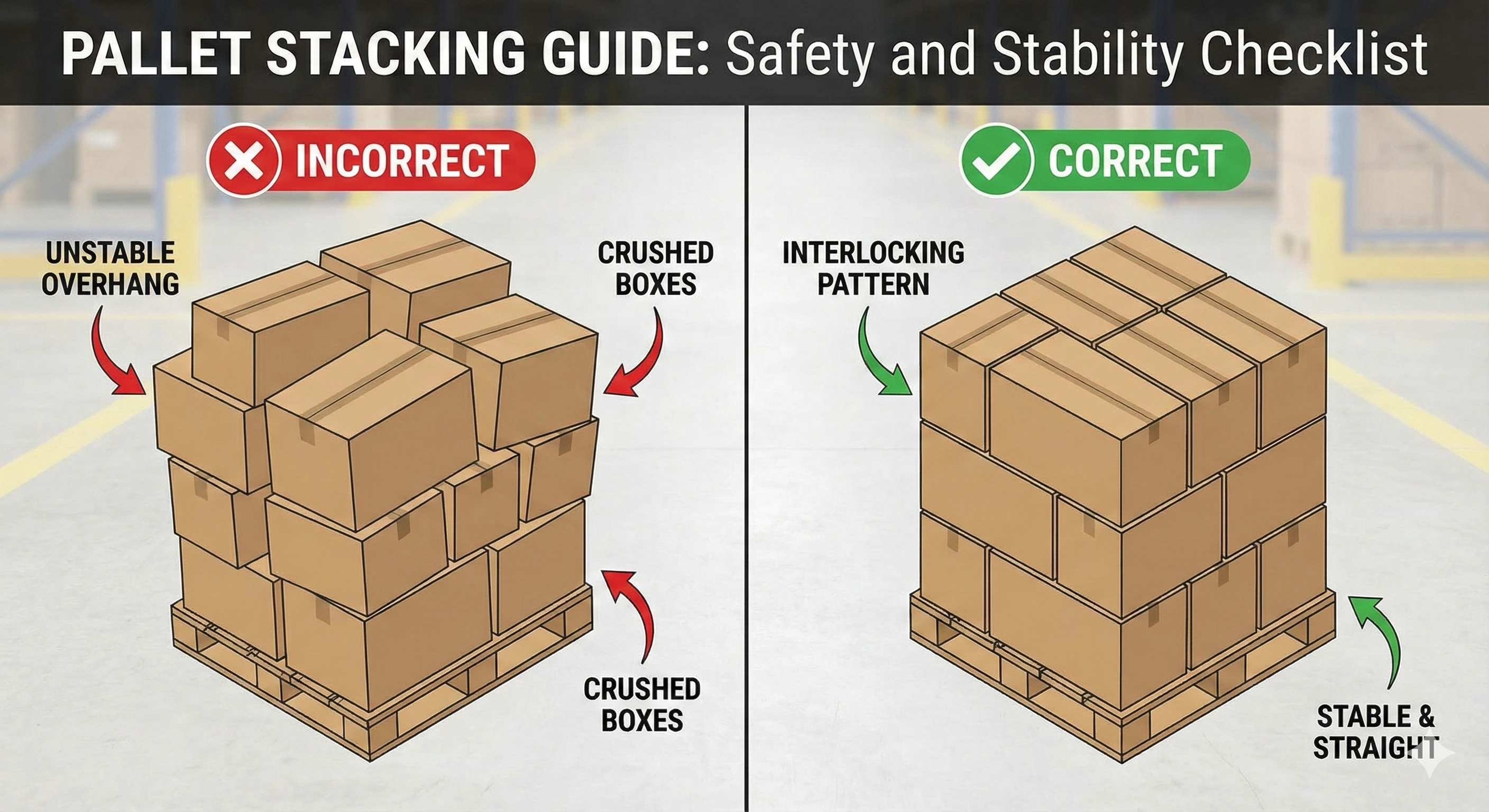
A well-organized warehouse is one of the easiest—and most overlooked—ways to prevent injuries. Poor housekeeping leads to falling objects, blocked aisles, and slip hazards, all of which are fully preventable with consistent upkeep.
Keeping the facility clean reduces slips, trips, fires, and even pest issues—making the warehouse safer and more efficient.
Personal protective equipment (PPE) is your first line of defense against common warehouse injuries. Workers should always have the right gear for their tasks, and supervisors must ensure PPE is worn consistently and replaced when damaged. Employers should also conduct a PPE Assessment or Job Hazard Assessment to identify workplace hazards and determine the right controls and protective equipment for each task.
PPE reduces injuries dramatically. Provide:
Add clear signage to mark:
Good PPE + good signage = fewer injuries and a more predictable work environment.
Need skilled warehouse workers who already understand PPE requirements?
Hire certified warehouse workers on Instawork.
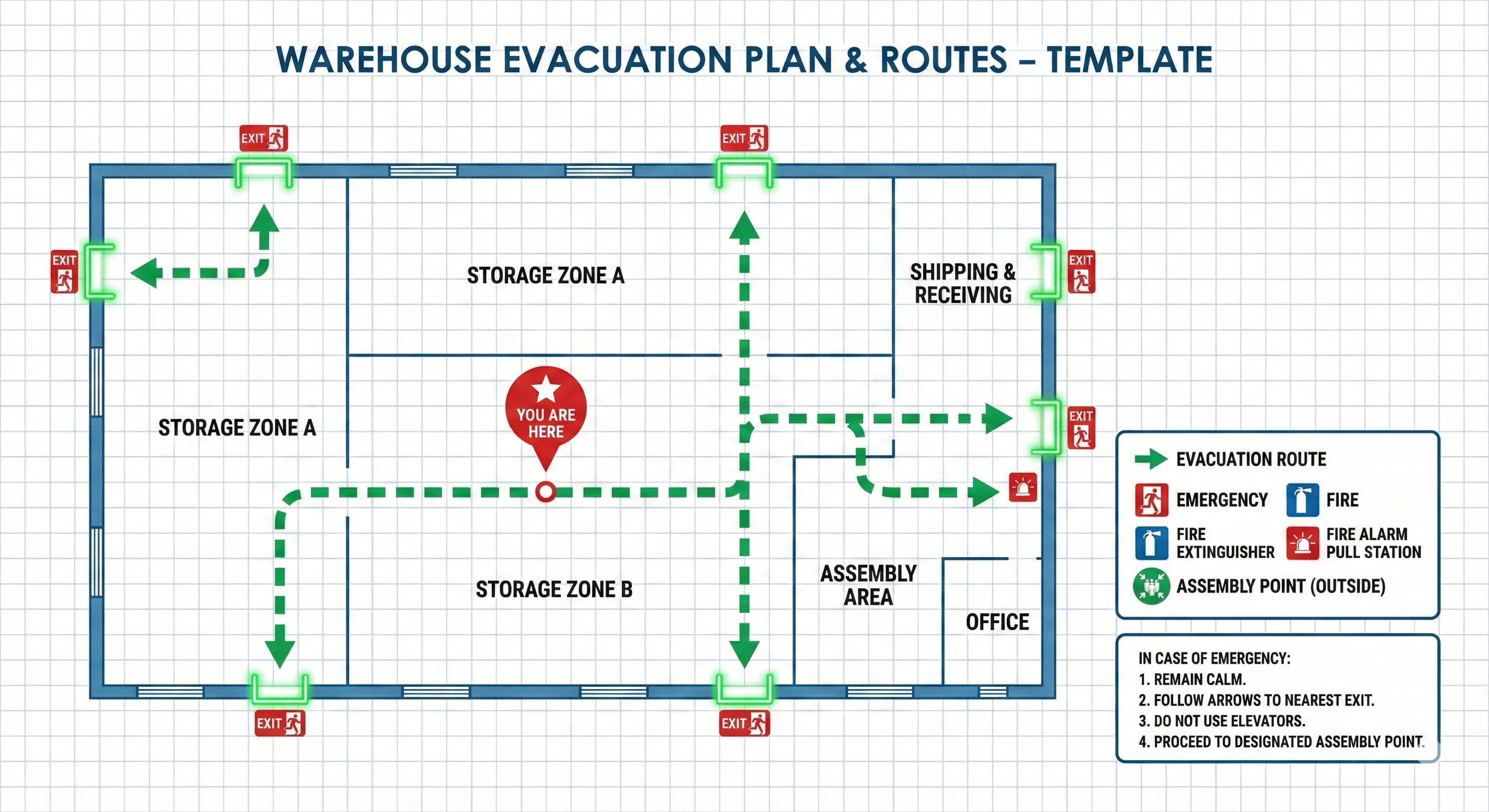
Even in well-managed warehouses, emergencies will happen. The best way to minimize harm is through planning, training, and practicing your response before an incident occurs.
Your plan should include:
Practice is key: training builds confidence and reduces panic.
Get a printer-friendly version of the full checklist to share with your team.
✔ Training & Safety Culture
✔ Ergonomics & Lifting
✔ Material Handling & Equipment
✔ Storage & Housekeeping
✔ PPE & Signage
✔ Emergency Preparedness
By implementing these essential warehouse safety measures—grounded in OSHA guidance and supported by recent research—you can significantly reduce workplace injuries and improve overall warehouse performance. Small changes in training, ergonomics, equipment maintenance, and emergency planning create a safer, more productive environment for every worker.
Looking to boost warehouse productivity with trained and safety-conscious workers?


