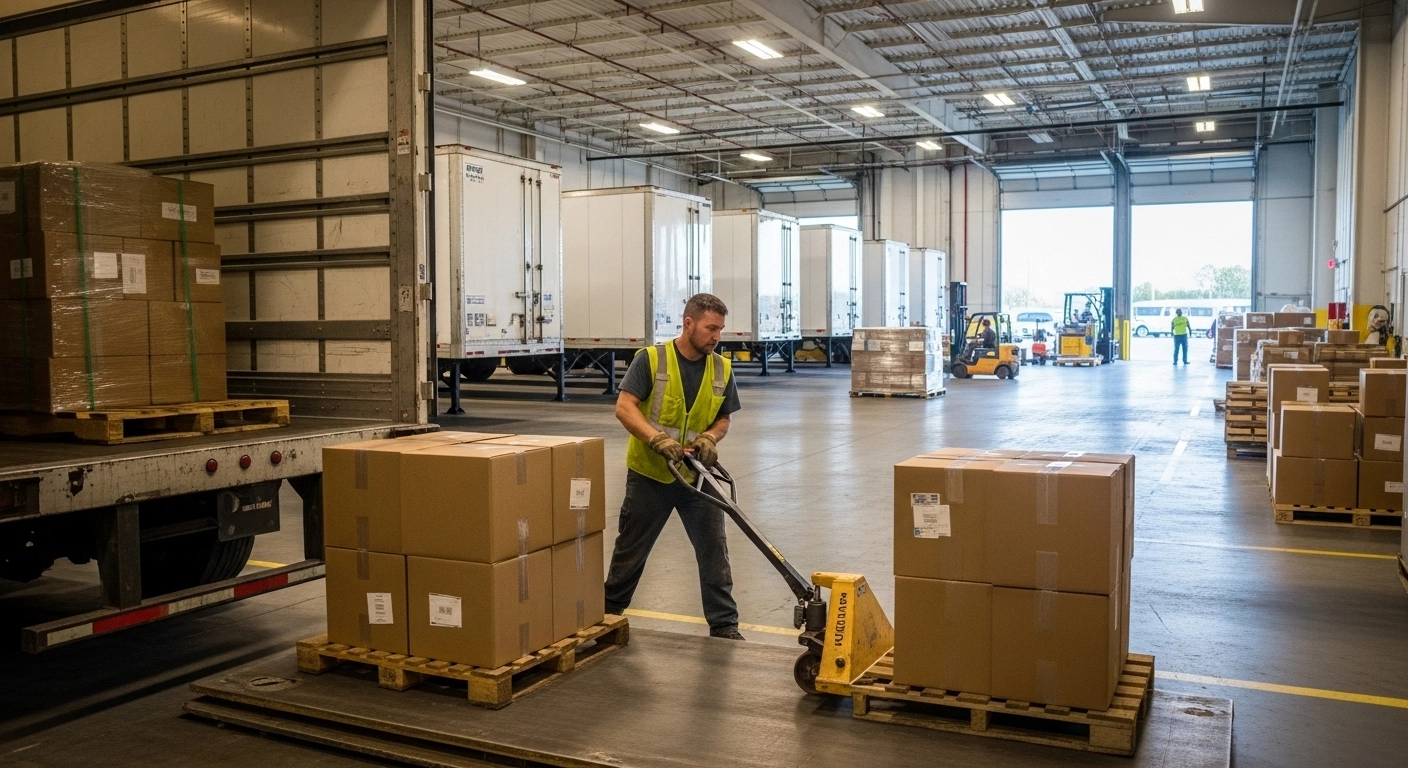
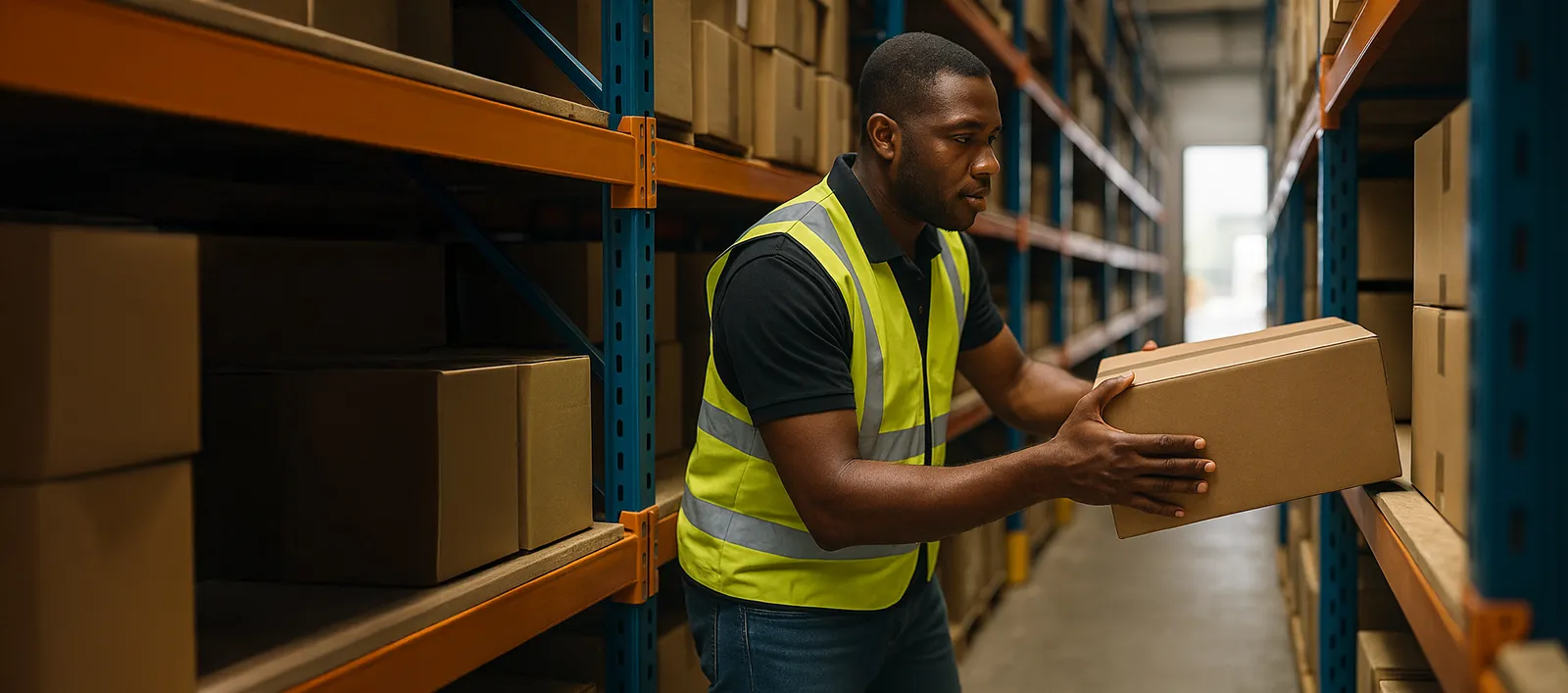
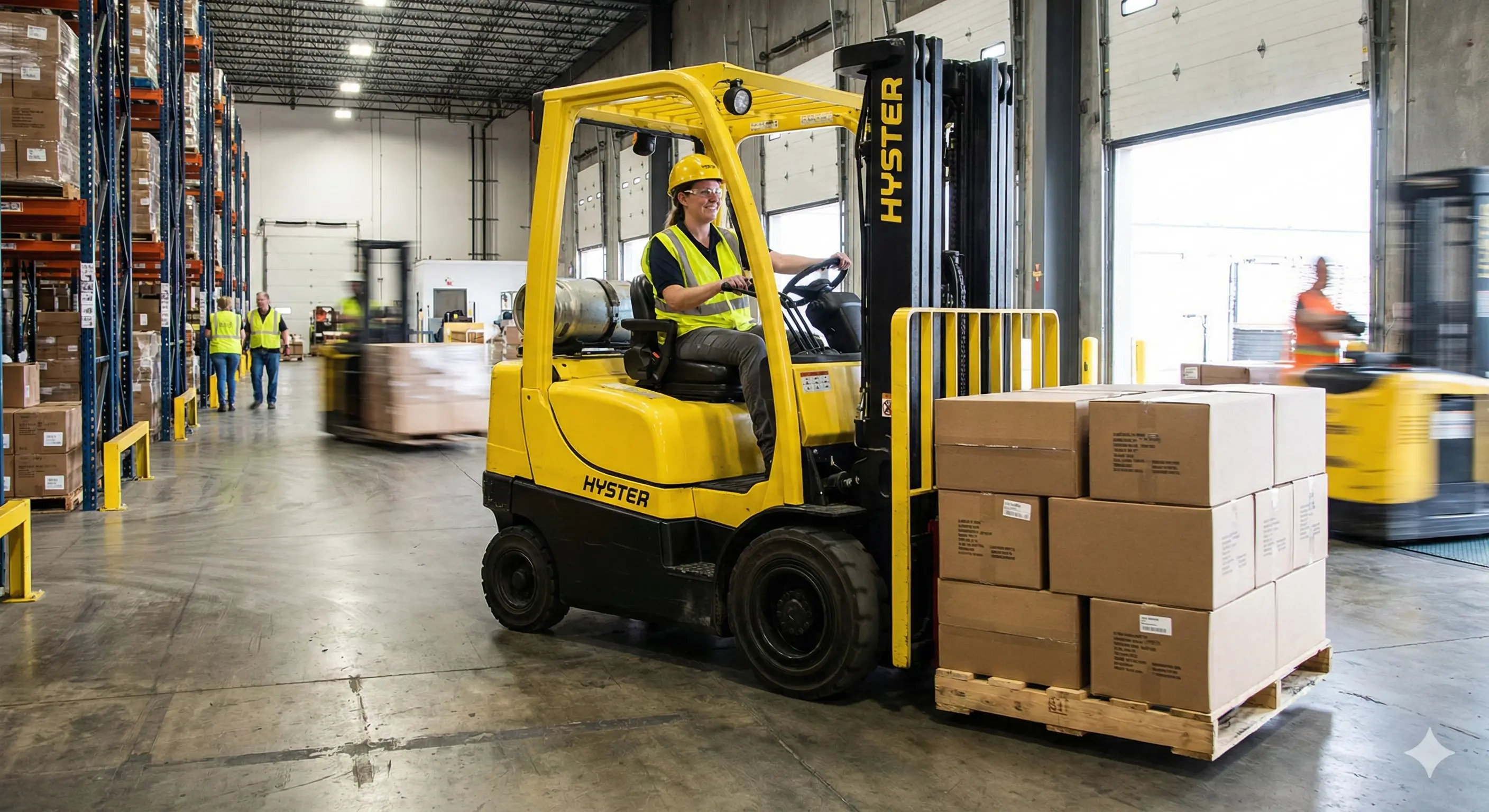
Lumpers load and unload freight at warehouses and cross-docks, keeping goods moving safely and on time. Interviews for this hands-on role can be brief yet still need to confirm safety habits, stamina, equipment familiarity, and schedule flexibility. This guide offers practical lumper interview questions with example responses so candidates can prepare and employers can evaluate consistently.
Most Common Lumper Interview Questions
- Walk me through your experience loading and unloading trailers.
- How do you keep a fast pace without sacrificing accuracy?
- Describe how you stay safe and keep the dock clean during busy periods.
- What’s your experience with pallet jacks, forklifts, and RF scanners?
- Have you worked in cold storage or extreme temperatures? How did you manage it?
- When several trucks arrive at once, how do you decide what to tackle first?
- Tell me about a dock issue you caught early and how you resolved it.
- How do you handle heavy, repetitive lifting over a full shift?
- How do you ensure counts and labels are accurate while unloading?
- What is your availability for overtime, nights, weekends, and holidays?
Experience & Pace Questions
Walk me through your experience loading and unloading trailers.
Sample Answer: I’ve unloaded mixed-SKU containers and live loads using manual pallet jacks, shrink wrap, and RF scanners to verify counts and lot codes. On my last team, I averaged two to three trailers per shift with near-zero damage by staging properly and communicating with receiving. I’m comfortable breaking down pallets, re-stacking, and meeting appointment windows.
What a Strong Answer Includes
- Specific tasks handled (palletizing, wrapping, scanning, staging) and typical freight types.
- Concrete metrics such as trailers per shift, pieces per hour, or error/damage rates.
- Team coordination and handoff practices with receiving or inventory control.
How do you keep a fast pace without sacrificing accuracy?
Sample Answer: I set a steady rhythm, pre-stage supplies, and group similar SKUs to reduce extra steps. I confirm counts at touchpoints—on the dock, in the WMS, and before final wrap—to avoid rework. If I see accuracy slipping, I briefly reset the workflow to protect quality and safety.
What a Strong Answer Includes
- Methods for balancing speed and quality (batching tasks, staging, visual checks).
- Use of WMS/RF verification and double-checks on high-risk items.
- Ownership of results with examples of maintaining targets and low error rates.
Safety & Physical Demands Questions
Describe how you stay safe and keep the dock clean during busy periods.
Sample Answer: I wear required PPE, lift with proper form, and keep aisles clear by returning pallets and wrap waste to designated areas. I report hazards immediately and address small spills or debris on the spot so they don’t become injuries. Housekeeping is part of my routine, not an afterthought.
What a Strong Answer Includes
- Examples of safe lifting, PPE use, and hazard reporting/cleanup.
- Concrete housekeeping habits (trash control, clear lanes, tool storage).
- Commitment to following site rules like dock plates, chocking, and traffic flow.
How do you handle heavy, repetitive lifting over a full shift?
Sample Answer: I rotate tasks when possible, use team lifts or mechanical assist for heavy items, and pace myself to maintain form. I hydrate and take scheduled breaks to avoid fatigue-related mistakes. If something feels unsafe, I stop and adjust the approach.
What a Strong Answer Includes
- Use of proper techniques, team lifts, and equipment for heavy moves.
- Strategies for stamina (pacing, hydration, micro-breaks) tied to consistent output.
- Willingness to pause and reset when conditions are unsafe.
Equipment & Environments Questions
What’s your experience with pallet jacks, forklifts, and RF scanners?
Sample Answer: I’m proficient with manual and electric pallet jacks and have operated stand-up forklifts where certified, including pre-shift inspections and safe load handling. I use RF scanners to confirm SKUs, lots, and counts, and I troubleshoot common WMS prompts. I follow all equipment sign-offs and site traffic rules.
What a Strong Answer Includes
- Named equipment (manual/electric jacks, stand-up/sit-down forklift) and any valid certifications.
- Inspection routines and safe handling, including load limits and visibility.
- RF/WMS fluency for scanning, exceptions, and reconciliation.
Have you worked in cold storage or extreme temperatures? How did you manage it?
Sample Answer: I’ve worked in 32°F coolers and subzero freezers using proper PPE, warm-up breaks, and grip-safe gloves. I plan moves to limit door-open time and keep product integrity while staying productive. I also monitor condensation and floor conditions to prevent slips.
What a Strong Answer Includes
- Clear mention of temperature ranges and appropriate PPE/break routines.
- Productivity tactics suited to cold/hot docks without cutting corners.
- Attention to floor safety, condensation, and equipment battery performance.
Scheduling & Work Authorization Questions
What is your availability for overtime, nights, weekends, and holidays?
Sample Answer: I’m available for second shift and can take overtime on short notice, including weekends during peak. In my last role, I averaged one to two overtime shifts per week during season. I’ll communicate conflicts early so coverage is never a surprise.
What a Strong Answer Includes
- Direct statement of availability with examples from prior roles.
- Flexibility for peaks and coverage plans when constraints exist.
- Reliable communication habits for schedule changes.
Are you legally authorized to work and able to meet site onboarding requirements?
Sample Answer: Yes, I’m authorized to work and can complete any required background checks or drug screening. I can also provide certifications and references promptly to speed up onboarding. I’m ready to start as soon as scheduling allows.
What a Strong Answer Includes
- Clear confirmation of work authorization and openness to screenings.
- Readiness with documents and certifications to prevent delays.
- Realistic start-date expectations that match the operation’s timeline.
Inventory, Coordination & Problem-Solving Questions
When several trucks arrive at once, how do you decide what to tackle first?
Sample Answer: I check appointment times, live unloads first, and product sensitivity, then coordinate with receiving for dock allocation. I stage to avoid cross-traffic and keep putaway flowing. Communicating ETAs prevents bottlenecks at peak times.
What a Strong Answer Includes
- Prioritization by appointment window, live vs. drop, and product needs.
- Coordination with receiving, drivers, and lead/supervisor.
- Staging practices that keep aisles clear and inventory moving.
Tell me about a dock issue you caught early and how you resolved it.
Sample Answer: I noticed a count mismatch on mixed pallets; I paused unload, re-scanned, and found two SKUs mislabeled. I corrected labels, updated the WMS, and flagged the vendor so receiving could inspect the rest. That prevented a larger reconciliation later.
What a Strong Answer Includes
- A clear situation, actions taken, and measurable result (time saved, errors avoided).
- Calm communication with the right teams (receiving, QA, supervisor).
- Process improvement or follow-up to prevent repeat issues.
How do you ensure counts and labels are accurate while unloading?
Sample Answer: I count by layer or case pack, verify SKU/lot against the manifest, and scan as I stage to reduce double handling. For exceptions, I tag and isolate items, then reconcile in the system before wrap. This keeps inventory clean and speeds putaway.
What a Strong Answer Includes
- Specific counting methods tied to WMS/RF workflows.
- Steps for handling discrepancies (isolation, tagging, documentation).
- Emphasis on clean handoffs to receiving/putaway.
What Strong Answers Include
- Safety first: PPE, lifting technique, hazard reporting, and housekeeping embedded in day-to-day routines.
- Operational clarity: equipment proficiency (pallet jacks, forklifts), RF/WMS competence, and coordination with receiving.
- Measured performance: specific metrics like pieces per hour, trailers per shift, low damage/error rates, and adaptability to peak demand.
Questions You Can Ask the Employer
- How is pay structured—hourly or piece-rate—and are there bonuses based on unload targets, weight, or SKU complexity?
- What dock environment should I expect (e.g., cold storage, food-grade, cross-dock), and what PPE is provided?
- How are safety training, equipment sign-offs, and hazard reporting handled here?
- How does your team coordinate lumper work with carriers and receiving to keep freight moving?
Tips for Acing a Lumper Interview
- Bring proof: any forklift/jack certifications, attendance awards, and references that speak to reliability and safety.
- Know your numbers: be ready to share typical trailers per shift, PPH, and error/damage rates.
- Dress practical: clean, job-appropriate clothing and closed-toe shoes; some sites accept casual attire but keep it neat.
- Expect speed: interviews are often short; prepare crisp examples and clear availability.
- Clarify onboarding: ask about start date, training, screenings, and badge/access steps.
FAQs About the Process
How long does the hiring process usually take?
Many sites move quickly—often within a few days from interview to offer—especially during peak seasons.
How difficult is a typical lumper interview?
Generally straightforward; expect questions on experience, safety, pace, and availability. Some interviews focus mainly on start date and shift fit.
What should I wear to the interview?
Clean, practical clothing works for most warehouse settings. Closed-toe shoes are a good idea in case of a brief floor tour.
Is there a drug test or background check?
Many employers require one or both; confirm site-specific requirements so you can complete them quickly.
What shifts are common?
First, second, and overnight shifts are typical, with overtime during peaks and occasional weekend/holiday coverage.