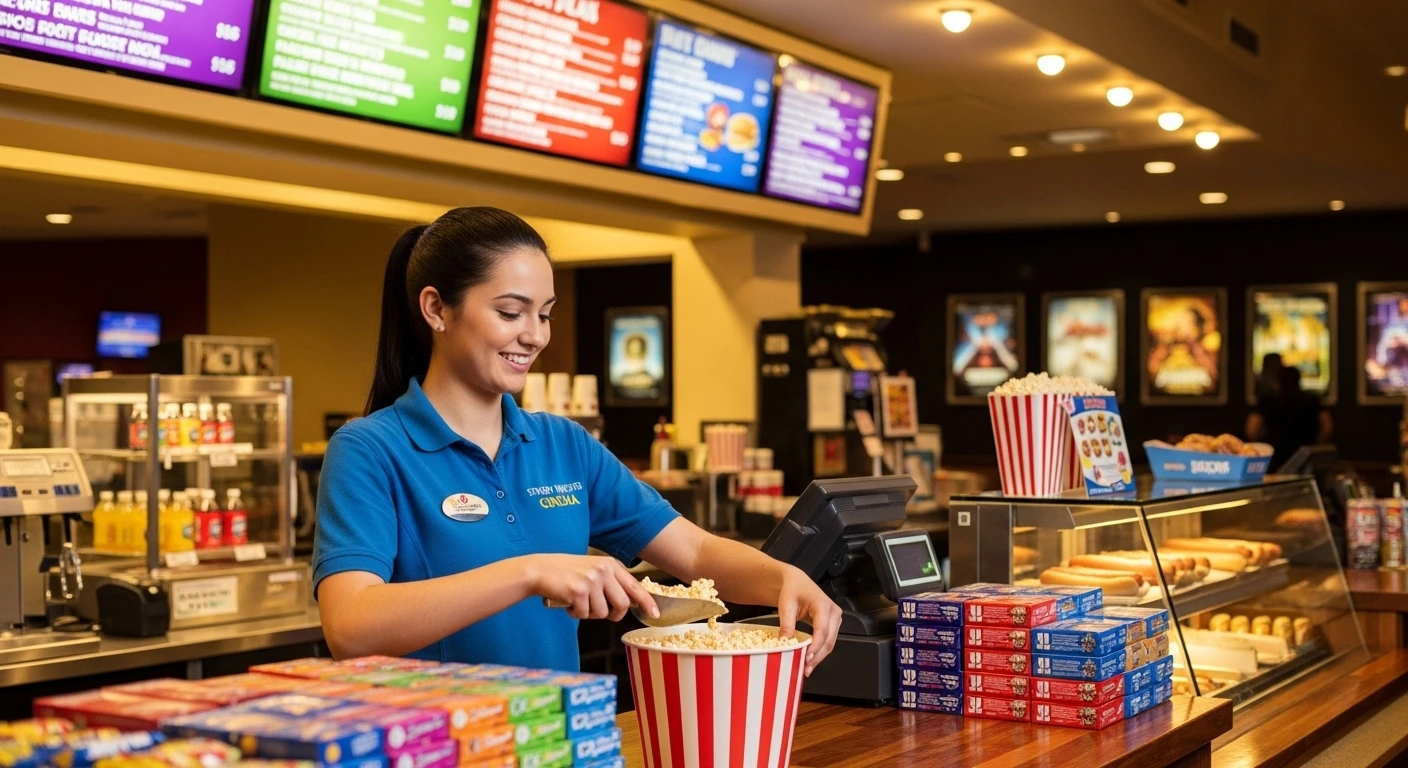
Concession stands keep events running smoothly by serving guests quickly, accurately, and safely while maintaining a friendly atmosphere. Interviews can be challenging because they test customer service, speed under pressure, food safety, cash handling, and teamwork all at once. This guide offers practical concession stand worker interview questions with concise sample answers and clear pointers for both candidates and hiring teams.
Most Common Stand Worker Interview Questions
- Tell me about a time you turned around an unhappy customer.
- How do you keep calm and efficient during a rush?
- What would you do to keep the line moving when it gets long?
- What steps do you take to maintain food safety at the stand?
- How would you handle a food allergy request?
- What experience do you have with POS systems and cash handling?
- How do you make sure the stand stays stocked and organized?
- Describe a time your team pulled together to get through a busy shift.
- Why do you want this job, and what makes you a good fit?
- How do you respond to feedback and to repetitive tasks?
Customer Service & De‑Escalation Questions
Tell me about a time you turned around an unhappy customer.
Sample Answer: I listened to the customer’s concern, apologized for the mix-up, and offered a quick replacement plus a small upgrade. I confirmed they left satisfied and let my lead know so we could prevent repeat issues by labeling orders more clearly.
What a Strong Answer Includes
- Empathy first, followed by a specific fix (replace, refund, or alternative)
- Clear, calm communication and ownership of the mistake
- A brief result that shows the customer left satisfied and learning was shared
How would you handle a wrong order discovered after the guest leaves the window?
Sample Answer: I would prioritize a quick remake and invite them to the pickup area so we don’t slow the line. I’d apologize, thank them for their patience, and alert the team to double-check ticket names to prevent repeats.
What a Strong Answer Includes
- Balancing speedy correction with keeping the main line moving
- Polite, blame-free language and visible ownership
- A process tweak (verification step) to avoid recurrence
Fast-Paced, High-Volume Questions
How do you keep calm and efficient during a rush?
Sample Answer: I focus on one step at a time, batch similar tasks, and communicate short updates with teammates. I keep my station organized so I can move fast without mistakes.
What a Strong Answer Includes
- Specific tactics: batching, concise communication, and clean station
- Examples of staying composed and avoiding errors
- Emphasis on speed with accuracy, not just moving quickly
What would you do to keep the line moving when it gets long?
Sample Answer: I would assign quick roles (order-taker, runner, cashier), suggest popular combos to speed decisions, and prepare high-volume items in small batches. I’d also update guests with wait-time cues to reduce frustration.
What a Strong Answer Includes
- Role clarity and simple workflows that reduce bottlenecks
- Proactive communication to set expectations
- Use of batching and pre-prep to increase throughput
How do you prioritize tasks at peak times?
Sample Answer: I prioritize guest-facing tasks first, then refill critical items that slow service if empty, and log restocking for a lull. I keep the lead informed so priorities stay aligned with demand.
What a Strong Answer Includes
- A clear order of operations (serve guests, prevent outages, tidy later)
- Judgment about what truly impacts wait times
- Brief coordination with the lead or team as volumes change
Food Safety & Hygiene Questions
What steps do you take to maintain food safety at the stand?
Sample Answer: I wash hands regularly, wear gloves correctly, avoid cross-contamination with separate tools/areas, and monitor holding and cooking temperatures. I also follow FIFO and label times for prepared items.
What a Strong Answer Includes
- Handwashing, glove use, and cross-contamination controls
- Temperature checks and time tracking for hot/cold holding
- FIFO, labeling, and cleaning/sanitizing routines
How would you handle a food allergy request?
Sample Answer: I would confirm the allergen, check ingredients and prep surfaces, change gloves, and use clean tools or a separate area. If there’s any doubt, I’d be transparent and offer safe alternatives or involve a manager.
What a Strong Answer Includes
- Verification of the allergen and ingredients before preparing
- Strict separation and fresh tools/gloves to prevent cross-contact
- Escalation or alternatives if safety cannot be guaranteed
What would you do if a teammate wasn’t following food-safety rules?
Sample Answer: I’d respectfully remind them of the correct step and why it matters, and if it continues or is high-risk, I’d notify the supervisor. Safety comes first, so I’d also fix any immediate issue on the spot.
What a Strong Answer Includes
- Respectful peer coaching focused on safety and guests
- Clear criteria for escalating to a manager
- Immediate corrective action to remove risk
Cash Handling & POS Questions
What experience do you have with POS systems and cash handling?
Sample Answer: I’ve used modern POS to process cards, cash, and refunds, balancing speed with accuracy. I count tills at start/end, verify receipts, and address discrepancies immediately with my lead.
What a Strong Answer Includes
- Specific POS tasks: sales, refunds, discounts, and reconciliations
- Accuracy habits (counting tills, receipt checks)
- Escalation steps for discrepancies and basic loss prevention
How do you prevent cash shortages or errors at close?
Sample Answer: I handle one transaction at a time, triple-check large bills, and keep the cash drawer organized by denomination. At close, I reconcile with reports and flag any variance right away.
What a Strong Answer Includes
- Drawer organization and single-transaction focus
- Verification steps for unusual transactions
- Reconciliation process tied to POS reports
Stocking & Inventory Questions
How do you make sure the stand stays stocked and organized?
Sample Answer: I check par levels before the shift, restock during slow moments, and keep items labeled and front-faced for quick grabs. I alert the lead early if an item risks running out.
What a Strong Answer Includes
- Pre-shift checks against par levels
- On-the-fly restocking that doesn’t slow the line
- Early communication to avoid outages
How do you reduce waste while keeping items available?
Sample Answer: I use FIFO, track sell-through during the event, and adjust batch sizes to match real demand. I separate seconds/near-expiry for staff guidance and report patterns for future ordering.
What a Strong Answer Includes
- FIFO and date/label discipline
- Real-time adjustments to prep volumes
- Feedback loop to refine ordering and par levels
Teamwork, Motivation & Fit Questions
Describe a time your team pulled together to get through a busy shift.
Sample Answer: We set quick roles, kept updates short, and helped each other when one station lagged. The line moved faster and we finished the rush without errors.
What a Strong Answer Includes
- Role clarity, communication, and mutual support
- A concrete outcome (shorter waits, fewer mistakes)
- Brief reflection on what the team learned
Why do you want this job, and what makes you a good fit?
Sample Answer: I enjoy fast-paced customer service and keeping guests happy at events. I bring reliable attendance, strong hygiene habits, and POS experience that helps the team hit goals.
What a Strong Answer Includes
- Genuine interest in event service and guest experience
- Two to three skills that match the job (speed, cleanliness, POS)
- Emphasis on reliability and teamwork
How do you respond to feedback and to repetitive tasks?
Sample Answer: I appreciate direct feedback and apply it right away, then check back to confirm improvement. For repetitive tasks, I use checklists and pace myself to keep quality consistent.
What a Strong Answer Includes
- Positive attitude toward coaching and quick follow-through
- Simple systems (lists, routines) to maintain accuracy
- Commitment to consistency during long shifts
Advanced Lead or Supervisor Questions
How do you ensure ongoing health and safety compliance on shift?
Sample Answer: I set clear sanitation intervals, rotate temperature checks, and verify logs. I coach in the moment and escalate any high-risk issues immediately.
What a Strong Answer Includes
- Defined cadence for cleaning and temperature monitoring
- Real-time coaching with documentation
- Zero tolerance for unsafe conditions
How do you manage inventory and reduce waste across events?
Sample Answer: I forecast with historical sales, adjust par levels by event type, and review variance after each shift. We tighten batch sizes and vendor orders based on those results.
What a Strong Answer Includes
- Data-informed par setting and forecasting
- Post-event reviews to spot patterns
- Actionable changes to prep and purchasing
What strategies do you use to upsell or increase sales?
Sample Answer: We feature bundles at the menu top, train staff on one-line add-ons, and sample new items when allowed. I track which offers convert and refine the script.
What a Strong Answer Includes
- Simple, consistent upsell language
- Menu design or placement that speeds decisions
- Measurement and iteration on promos
How do you staff for peak times?
Sample Answer: I schedule based on ticket time and past sales, cross-train staff, and keep a standby list. Roles are pre-assigned so we’re ready when gates open.
What a Strong Answer Includes
- Use of demand patterns to set headcount
- Cross-training to plug gaps fast
- Role assignments that prevent bottlenecks
What would you do if a supplier failed to deliver before a big event?
Sample Answer: I’d contact backup vendors, adjust the menu to protect best-sellers, and update signage to set expectations. I’d also communicate with leadership and track lost sales for recovery planning.
What a Strong Answer Includes
- Contingency sourcing and menu simplification
- Clear guest communication on changes
- Post-mortem tracking to prevent repeat issues
What to Expect in the Interview
- Difficulty: typically easy to medium, focusing on people skills and stress handling.
- Timeline: often 1–2 days to about a week from application to offer, depending on the venue.
- Focus areas: customer service, speed under pressure, cleanliness/food safety, cash accuracy, teamwork.
Quick Tips for Candidates and Employers
- Candidates: bring short, specific stories and quantify results when possible (e.g., reduced wait by 20%).
- Candidates: mention concrete hygiene steps (gloves, temps, FIFO) and POS accuracy habits.
- Employers: probe for calm, clarity, and ownership; ask follow-ups that reveal real examples.