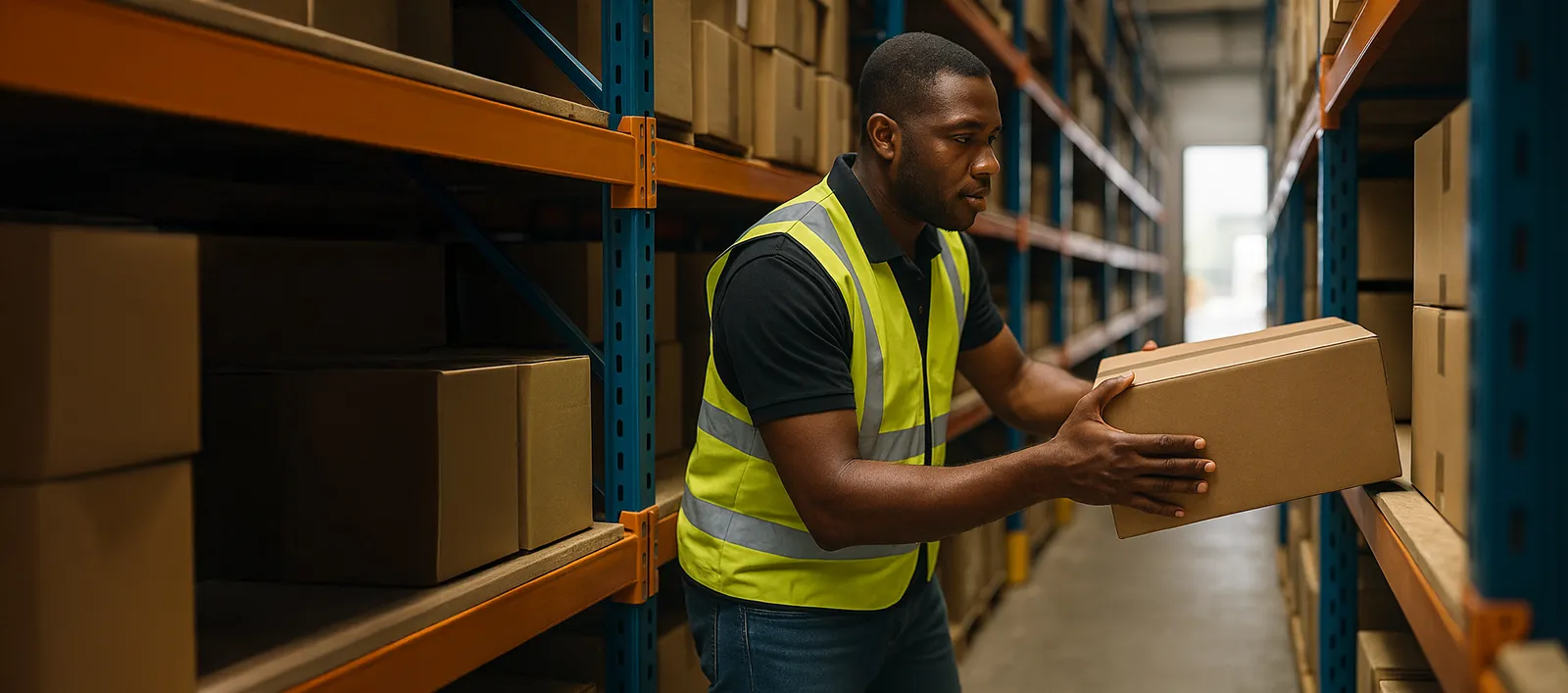
Here are the most common warehouse worker's duties and responsibilities.
A Job Brief is a short, engaging summary of a role, highlighting its purpose, impact, and key responsibilities—used to attract candidates.
Use this warehouse worker job brief example and update it for your warehouse job post.
Location: [City, State]
About Us:
At [Your Company Name], we foster a dynamic and inclusive work environment where every team member plays a vital role in our success. Our team values collaboration, efficiency, and attention to detail. We are committed to innovation and excellence, creating a culture that supports professional growth and recognizes contributions.
Role Overview:
We are seeking a dependable Warehouse Worker to help ensure the smooth operation of our warehouse. In this role, you will assist with receiving, storing, picking, packing, and shipping products. The ideal candidate is detail-oriented, physically capable, and works well both independently and as part of a team.
Key Responsibilities:
Qualifications:
Why Join Us:
A Job Brief is a short, engaging summary of a role, highlighting its purpose, impact, and key responsibilities—used to attract candidates.
At [Company Name], efficient operations and timely deliveries are essential to keeping our customers satisfied. We’re looking for a dependable Warehouse Worker to help maintain smooth warehouse operations. In this role, you’ll receive, process, store, and organize inventory, as well as pick, pack, and prepare orders for shipment. The ideal candidate is detail-oriented, organized, and committed to teamwork, safety, and accuracy. Join us and play a key role in ensuring our products reach customers on time while supporting a collaborative and high-performing warehouse team.
A career as a warehouse worker offers numerous opportunities for advancement within the logistics and supply chain industry. With dedication and the right skills, employees can progress through various roles with increasing responsibility and earning potential. Potential growth paths include:
With commitment and proactive skill development, warehouse workers can build a rewarding career in logistics and supply chain management, progressing into specialized or leadership roles over time.
Warehouse work often includes a variety of shift options to meet operational demands. Depending on the facility, workers may be scheduled for daytime, evening, overnight, weekend, or holiday shifts. Many warehouses offer flexible, rotating, full-time, or part-time schedules, as well as overtime opportunities during peak periods.
Warehouse workers may have access to benefits that support their health, finances, and work–life balance, including:
Here are the most common job titles related to warehouse worker:
What are the typical work hours for a warehouse worker?
Work hours for warehouse workers can vary significantly, often influenced by seasonal demands and the need for overtime. Shifts may include early mornings, late nights, weekends, and holidays, depending on the operational requirements of the warehouse.
What qualifications do I need to apply for a warehouse worker position?
To apply for a warehouse worker position, candidates typically need a high school diploma, GED, or equivalent. Additionally, obtaining a Forklift Certification within 90 days of starting the job is required. Familiarity with Radio Frequency (RF) equipment is also preferred.
What skills are important for a warehouse worker?
Essential skills for warehouse workers include teamwork, coordination, organization, planning, time management, reporting, inventory control, documentation, equipment maintenance, data entry, and dependability. These skills help ensure efficient operations within the warehouse.
How can I apply for the warehouse worker position?
Interested candidates can apply by submitting an application and resume. For more information on the application process, applicants are encouraged to contact the company directly.
What does a Warehouse Worker do?
A Warehouse Worker is responsible for preparing and receiving orders, moving, stocking, scanning, and recording product inventory. They may work for a single company or as part of a logistics team to ensure timely delivery of products to customers or businesses.
What are the duties and responsibilities of a Warehouse Worker?
Daily responsibilities include restocking shelves, accepting incoming orders, processing and packing orders, counting inventory, and ensuring timely shipment of orders. Warehouse Workers play a crucial role in maintaining the flow of goods within the warehouse.
What makes a good Warehouse Worker?
A good Warehouse Worker possesses a strong work ethic, is proactive in seeking tasks, and has excellent time management and documentation skills. Dependability and the ability to work well in a team environment are also key traits. Some positions may require knowledge of forklift operation.
Who does a Warehouse Worker work with?
Warehouse Workers collaborate closely with other warehouse staff and report to a Warehouse Manager or Foreman. They work together to ensure efficient operations and may receive daily instructions based on the logistics of incoming and outgoing shipments.
What are the traits of a good Warehouse Worker?
Good Warehouse Workers are self-starters with a strong memory for product details and warehouse layout. They communicate effectively with team members about task statuses and maintain accurate records according to company policies.
What is the difference between a Warehouse Worker and a Forklift Operator?
While some Warehouse Workers may operate forklifts, their role encompasses a wider range of tasks. Forklift Operators primarily handle heavy machinery for moving large items, whereas Warehouse Workers engage in various activities such as picking items, sorting goods, and preparing shipments.
What are the daily duties of a Warehouse Worker?
Daily tasks may include counting inventory, sorting goods, restocking shelves, and using logistics software to manage incoming orders. Warehouse Workers also update inventory records and tracking data to ensure accurate order fulfillment.
Who does a Warehouse Worker report to?
Warehouse Workers report directly to a Warehouse Manager or Foreman, who organizes daily workflows and assigns tasks based on the current needs of the warehouse. Collaboration among team members is essential to meet operational goals.